Medium-scale Reverse Osmosis Equipment: Balanced Factory Water Purification Solution
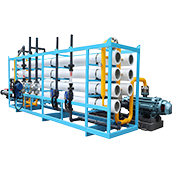
Medium-scale reverse osmosis equipment is a balanced water purification solution positioned between small pilot units and heavy-duty large water stations. It can be transformed into Containerized reverse osmosis equipment for movable projects, and can also be upgraded to reach the standard of RO equipment with product water conductivity <10μs/cm. With balanced water yield, footprint and investment budget, it is widely favored by steadily expanding manufacturing enterprises.

Product Description
Medium-scale reverse osmosis equipment covers standardized systems with hourly water output generally ranging from 5 to 20 cubic meters, targeting medium-sized independent factories and single-workshop centralized water supply projects. Many growing enterprises encounter selection dilemmas: small-sized equipment cannot keep up with expanding production, while large-scale water treatment units bring excessive initial investment and idle capacity. This medium-spec series perfectly fills this market gap.
Customers can select fixed skid-mounted indoor configuration or carry out overall assembly transformation to build complete Containerized reverse osmosis equipment for temporary construction sites and mobile industrial projects. By matching high-rejection membrane assemblies and optimizing pretreatment modules, the system can be upgraded to achieve the index of RO equipment with product water conductivity <10μs/cm when higher water purity is required. All systems reserve abundant expansion interfaces to adapt to future continuous production capacity growth.
Working Principle
Medium-scale reverse osmosis equipment operates based on pressure-driven physical membrane separation technology. Raw water flows into multi-stage graded pretreatment units to intercept suspended sediment, residual chlorine and scaling ions, effectively lowering contamination risks of built-in RO membrane elements. After precision security filtration, feed water is pressurized by matched medium-flow high-pressure pump groups and evenly distributed to each membrane housing.
Under hydraulic pressure higher than natural osmotic pressure, pure water molecules penetrate semi-permeable polyamide membranes to form finished product water. Dissolved salts, colloids, microorganisms and organic pollutants are intercepted and discharged with concentrated brine. The built-in PLC controller executes timing automatic flushing. With flexible module adjustment, the whole system can maintain stable recovery rate ≥75% under different raw water quality and water purity requirements.
Technical Features
1. Balanced medium-flow standardized architecture:
Pumps, pipelines and membrane assemblies are matched for medium water demand. It avoids power waste of large units and insufficient capacity defects of small pilot equipment.
2. Two deployment modes optional:
Standard indoor skid-mounted structure is supplied. The whole system can be integrated inside containers to form Containerized reverse osmosis equipment for movable projects.
3. Adjustable effluent purity configuration:
Different grades of RO membranes can be selected. After optimization, the unit can meet the technical requirements of RO equipment with product water conductivity <10μs/cm.
4. PLC automatic intelligent control:
Equipped with automatic start-stop, multi-level pressure interlock protection and cyclic membrane flushing. Reserved communication interfaces support subsequent function expansion.
5. Wide raw water adaptability:
Pretreatment assembly can be adjusted flexibly for tap water, well water and surface water to cope with diversified on-site water quality conditions.
Product Advantages
1. Optimal input and output ratio:
Compared with small-scale equipment, it supports continuous mass production; compared with large industrial systems, it reduces occupation of capital and factory space.
2. Strong scene adaptability:
Suitable for fixed factory workshops; the containerized version can be used for temporary factories, mining areas and short-term construction projects.
3. Gradual upgrade potential:
When water demand rises continuously, extra membrane trains can be added. It avoids replacing the whole set of equipment in a short period.
4. Convenient daily maintenance:
The integrated frame reserves independent overhaul passages. Universal standardized spare parts reduce procurement cycle and maintenance cost.
5. Flexible water purity switching:
Users can adjust membrane configuration according to production batches to switch between conventional industrial water and high-purity water standard of RO equipment with product water conductivity <10μs/cm.
Application Fields
1. Medium-sized food and beverage processing factories:
Supply stable process purified water for dairy, condiment and snack continuous production lines.
2. Medium-scale daily chemical and cosmetic manufacturing plants:
Meet water demand for raw material blending, pipeline cleaning and medium-batch production.
3. Electronics auxiliary component cleaning workshops:
Provide rinsing water for circuit boards, plastic accessories and electronic prototype samples.
4. Medium-sized pharmaceutical auxiliary material factories:
Produce qualified purified water for reagent preparation and production equipment cleaning.
5. Medium heating boiler supporting projects:
Generate boiler make-up water to slow pipeline scaling and improve overall thermal efficiency.
6. Mining and temporary industrial projects:
Adopt Containerized reverse osmosis equipment to provide on-site water purification solutions without fixed plant construction.
FAQs
Q1: What range of hourly water yield belongs to Medium-scale reverse osmosis equipment?
A1: This series generally covers 5~20 m³/h. We can carry out targeted scheme design, and configure modules to realize the standard of RO equipment with product water conductivity <10μs/cm as required.
Q2: Can Medium-scale reverse osmosis equipment be transformed into mobile container type?
A2: Yes. The whole set can be integrated inside standard containers to build complete Containerized reverse osmosis equipment, suitable for temporary factories, mining zones and short-term projects.
Q3: Is it possible to expand water yield after the medium-scale system is put into operation?
A3: The modular structure reserves expansion interfaces. When water consumption increases, we can add membrane assemblies and adjust supporting pump parameters without replacing the whole rack.
Q4: What are the key factors affecting final effluent conductivity of medium-scale RO systems?
A4: Raw water salinity, RO membrane grade and pretreatment effect are core influencing factors. We will match corresponding membrane assemblies if customers need to reach the standard of RO equipment with product water conductivity <10μs/cm.
Q5: Can this medium-scale unit adapt to well water with high turbidity?
A5: We can add multi-media filtration, softening and other pretreatment units according to water quality test reports to reduce pollutant load and protect internal RO membrane elements.
You May Also Be Interested In