100 Tons/Hour Reverse Osmosis System: Utility-Scale Water Supply Infrastructure
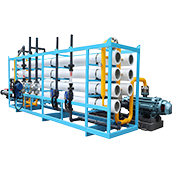
A 100 Tons/Hour (≈ 22,000 GPH / 528,000 GPD) Reverse Osmosis System by Lefilter is a major water production facility, representing large-scale infrastructure critical for municipal water supply, regional industrial development, or island water security. This is not just equipment; it is a fully engineered water treatment plant requiring comprehensive design, project management, and long-term performance assurance.
The Pinnacle of Industrial Desalination & Purification
This scale is synonymous with strategic water supply projects where reliability, lifecycle cost, and environmental compliance are paramount.
Features of a Utility-Scale RO Plant
Complete Water Treatment Works: The project includes raw water intake, extensive pretreatment (often featuring dual-media filtration followed by ultrafiltration), the multi-train RO building, post-treatment (remineralization, disinfection), product water storage, and concentrate management systems.
Advanced Process Control & Monitoring: A full-scale distributed control system (DCS) with remote telemetry oversees the entire plant. It includes predictive analytics for membrane performance, chemical dosing optimization, and integrated safety systems.
Focus on Sustainability: Design emphasizes maximizing recovery, minimizing energy use through high-efficiency ERDs, and implementing responsible brine management strategies. Solar or wind power integration can be evaluated.
Key Advantages of Partnering with Lefilter for 100 T/H+
Strategic Water Security: Provides a drought-proof, high-quality water source for over 2.4 million liters per day, capable of supporting large populations or industries.
Proven Technology & Engineering: Leverages decades of experience in designing and building large-scale RO plants, ensuring proven performance and reliability.
Lifecycle Cost Optimization: The design focuses on minimizing the total cost of ownership over a 20+ year lifespan through energy efficiency, durable materials, and easy maintenance access.
Single-Point Responsibility: As a provider of comprehensive solutions, we manage the entire project lifecycle—from feasibility study and design to construction, commissioning, and long-term service support.
Technical & Project Specifications
Parameter | Consideration for 100 T/H+ Plant |
|---|
Plant Capacity | 100 m³/Hour / 22,000 US GPH / 528,000 US GPD (1.26 MLD) |
Plant Design | Custom-engineered facility, often housed in a dedicated building. |
Core RO System | Multiple independent trains (e.g., 6-10 trains) for ultimate reliability and flexible loading. |
Key Performance Indicator | Specific Energy Consumption (kWh/m³) is a primary design and operational metric. |
Project Delivery Model | Often executed as an EPC (Engineering, Procurement, Construction) or DBOM (Design, Build, Operate, Maintain) contract. |
Project Applications
Municipal Seawater Desalination: Providing a primary or supplemental potable water supply for cities and regions.
Industrial Water Complexes: Supplying ultra-pure process water for massive industrial complexes like petrochemical hubs or gigafactories.
Mining & Resource Projects: Providing all process and potable water for large-scale mining operations in arid regions.
Island Nations & Resorts: Creating self-sufficient water supply infrastructure for tourism or community development.
Frequently Asked Questions
Q: What is the typical capital cost range for a plant of this scale?
A: Capital costs are highly site-specific, depending on feedwater quality, intake/outfall requirements, local construction costs, and energy recovery needs. A rough range is $0.5 - $1.5 million USD per 1,000 m³/day of capacity, with seawater plants at the higher end.
Q: What is the expected lifespan of the plant?
A: With proper maintenance and periodic upgrades, the core concrete and structural elements can last 30+ years. Major equipment like pumps and membranes have lifespans of 10-20 and 5-7 years, respectively, with ongoing replacement.
Q: How do you ensure the plant meets long-term performance guarantees?
A: We base our performance guarantees on rigorous design simulations and pilot testing. Long-term service agreements with guaranteed membrane performance and energy consumption are standard for projects of this scale, aligning our success with the plant's operational success.