5 Tons/Hour Reverse Osmosis Equipment by Lefilter: Robust Industrial-Grade Water Purification
5 Tons/Hour (≈ 1,100 GPH / 26,400 GPD) Reverse Osmosis Equipment from Lefilter represents a fully industrialized, skid-mounted purification system designed for continuous, high-demand operation in medium to large-scale manufacturing, food processing, and institutional facilities. This system delivers a substantial and reliable stream of purified water, engineered for efficiency, durability, and ease of integration into your core process utilities.
Engineered for Industrial Duty and Consistent Output
This capacity bridges the gap between pilot-scale and massive municipal systems, demanding robust engineering for 24/7 reliability.
Optimized Multi-Stage Industrial Design
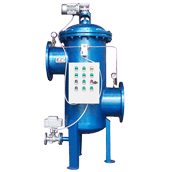
Robust Pretreatment Skid: To protect the significant investment in membranes, the system features a comprehensive pretreatment package, often including an automatic multimedia filter, activated carbon filter, and a precision antiscalant dosing system.
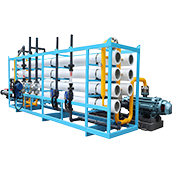
High-Efficiency RO Array: Utilizes an array of standard 8-inch membrane elements arranged in a pressure vessel configuration (e.g., 3:2 or 4:2 array) to optimize flux, recovery, and membrane lifespan. A high-pressure, multi-stage centrifugal pump provides stable, energy-efficient operation.
Advanced Control & Monitoring: A central PLC-based control panel with color touchscreen HMI provides full automation, including system start/stop, high/low-pressure protection, automatic flush cycles, and data logging for performance tracking and preventative maintenance.
Key Features of the 5 T/H RO System
Substantial Continuous Output: Delivers a reliable 5 cubic meters per hour of purified water, capable of supporting full production lines or large central utilities.
High System Recovery: Engineered to achieve 70-80% recovery from brackish water sources, minimizing wastewater generation and source water consumption.
Industrial Component Reliability: Built with industrial-grade pumps, high-flow valves, FRP pressure vessels, and corrosion-resistant piping, ensuring longevity and minimal downtime.
Energy-Optimized Design: The hydraulic design and pump selection are optimized to deliver the required pressure with minimal energy consumption, reducing operational costs.
Pre-Engineered & Skid-Mounted: Supplied as one or two fully assembled, pre-piped, and factory-tested skids. This minimizes on-site installation time and cost, requiring only utility connections.
Technical Specifications
Parameter | Specification for 5 T/H System |
|---|
Nominal Permeate Flow | 5 m³/Hour / 1,100 US GPH / 26,400 US GPD |
Standard Recovery Rate | 70% - 80% (for brackish water < 2,000 ppm TDS) |
Feed Water Quality | SDI15 < 5, Turbidity < 1 NTU, Free Chlorine < 0.1 ppm |
Operating Pressure | 150 - 250 psi (10 - 17 bar) typical for brackish water |
Membrane Configuration | Typically uses 8-inch elements in a 6-8 vessel array. |
High-Pressure Pump | Stainless steel multistage centrifugal pump, ~11-15 kW motor. |
Control System | PLC with HMI, featuring automatic operation and alarm logging. |
Primary Applications
Medium-Scale Manufacturing: Process and rinse water for electronics components, automotive parts, and chemical production.
Food & Beverage Processing: Primary water treatment for breweries, dairy plants, and juice production facilities.
Central Utility Plants: Supply of high-purity boiler feedwater for hospitals, university campuses, or district heating systems.
Commercial Laundries & Car Washes: Primary source of softened, demineralized water to improve efficiency and reduce chemical use.
Frequently Asked Questions
Q: What is the footprint of a typical 5 T/H system?
A: A standard two-skid system (pretreatment + RO) typically requires a floor space of approximately 6m (L) x 2.5m (W), plus access for maintenance.
Q: Can this system handle variable feedwater, like a river source?
A: Yes, but it requires appropriately sized pretreatment. We would design the pretreatment skid (e.g., flocculation/dosing plus multimedia filtration) to handle seasonal variations in turbidity and organics.
Q: Is a storage tank required?
A: Highly recommended. A permeate storage tank (e.g., 10-20 m³) with a delivery pump allows the RO system to run in efficient, continuous batches and meet variable process demand.
Q: What is the expected lifespan of the major components?
A: With proper maintenance: High-pressure pump: 7-10+ years. Membranes: 3-5 years. Control system: 10+ years. Pretreatment media: 1-3 years.