1 Ton/Hour Reverse Osmosis Equipment by Lefilter: Compact Power for Consistent Pure Water Supply
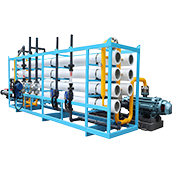
The 1 Ton/Hour (≈ 220 GPH / 5,280 GPD) Reverse Osmosis Equipment from Lefilter is a robust, skid-mounted workhorse designed for small to medium industrial facilities, pilot plants, and large commercial applications. This system delivers a reliable and continuous supply of purified water, ideal for processes requiring consistent quality at a manageable scale. It balances compact design with industrial-grade performance.
Engineered for Reliability in Compact Form
This capacity is a sweet spot for many applications, requiring a system that is more robust than undersized units but without the complexity of large plants.
Efficient Single or Dual-Stage Process
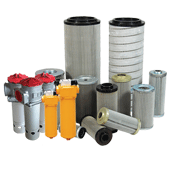
Integrated Pretreatment: The skid typically includes a multi-cartridge filter housing (for sediment and carbon filtration) and an antiscalant dosing system to prepare feedwater for the membranes.
Core RO Filtration: Feedwater is pressurized by a durable high-pressure pump and fed to a compact array of one or two membrane vessels. The system efficiently separates purified permeate from the concentrate stream.
Simple Control & Monitoring: User-friendly controls with pressure gauges, conductivity meter, and flow indicators allow for easy operation and performance tracking.
Key Features of the 1 T/H System
Steady, Reliable Output: Delivers a consistent 220 gallons per hour of purified water, perfect for continuous or batch process feeding.
Space-Efficient Skid Design: All major components are mounted on a single, compact, epoxy-coated steel frame, minimizing footprint and simplifying installation.
Optimized Recovery Rate: Engineered to achieve a 50-75% recovery rate (product water vs. feedwater), efficiently using source water and minimizing waste.
High-Quality Product Water: Effectively reduces TDS by 97-99%, producing water with conductivity typically < 50 µS/cm (depending on feed), suitable for a wide range of industrial uses.
Low Operating Costs: Energy-efficient pump and optimized hydraulic design keep electricity costs down, while long-lasting, standard-sized membrane elements reduce replacement costs.
Technical Specifications: 1 T/H RO System
Parameter | Specification for 1 T/H (≈ 5,280 GPD) System |
|---|
Permeate Flow Rate | 1,000 Liters per Hour (L/H) / 220 Gallons per Hour (GPH) |
Standard Recovery | 50% - 75% (configurable based on feed water quality) |
Feed Water Requirements | TDS < 2,000 ppm; SDI15 < 5; Free Chlorine < 0.1 ppm |
Operating Pressure | 150 - 225 psi (10 - 15 bar) |
Membrane Configuration | Typically 1-2 pressure vessels with 4" diameter membranes |
Power Supply | 380V/3Phase/50Hz (or as per local standards) |
Dimensions (LxWxH) | Approx. 2.5m x 1.2m x 1.8m (customizable) |
Ideal Applications
Small Manufacturing Plants: Process water for chemical production, metal finishing, or textile dyeing.
Commercial Boiler Feedwater: Supply for low to medium-pressure steam boilers in hospitals, universities, or food processing plants.
Bottled Water & Beverage Production: Primary purification step.
Laboratory & Research Facilities: Central pure water supply.
Pilot Plants & R&D: Scalable, reliable water source for process testing.
FAQ
Q: Is this a plug-and-play system?
A: It is a skid-mounted system requiring connection to feedwater, drain, power, and product water storage. Installation is straightforward, and we provide comprehensive commissioning support.
Q: What is the typical power consumption?
A: For a standard 1 T/H brackish water system, the main high-pressure pump typically draws between 2.2 - 4 kW, depending on feed pressure and required recovery.
Q: Can the output quality be improved for more sensitive applications?
A: Absolutely. This system can be the foundation for higher purity. Adding a secondary RO stage or a mixed-bed polish filter after the unit can produce water with conductivity < 1 µS/cm.
Q: What maintenance is required?
A: Routine maintenance includes replacing pre-filter cartridges every 1-3 months, monitoring performance data, and cleaning or replacing RO membranes every 2-5 years based on feed quality and operation.