Large-Scale Reverse Osmosis Equipment by Lefilter: Industrial-Grade Purification for High-Volume Demand
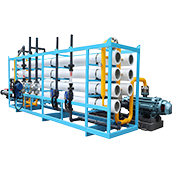
Large-Scale Reverse Osmosis (RO) Equipment from Lefilter is engineered to deliver massive volumes of purified water for municipalities, power plants, large-scale manufacturing, and infrastructure projects. These are not merely scaled-up units, but intelligently designed systems that optimize energy use, recovery rates, and operational reliability to meet the relentless, high-volume pure water demands of industry and communities. Our solutions are built for performance and longevity under continuous duty.
Engineered for High-Throughput and High-Reliability
Large-scale systems face unique challenges: managing vast feedwater volumes, controlling energy costs, handling variable feed quality, and ensuring uninterrupted operation. Lefilter’s approach integrates advanced engineering with robust components.
Core Design Philosophy & Operation
Modular Array Configuration: The system is built around multiple parallel trains of membrane racks. This allows for partial operation during maintenance, easy capacity expansion, and redundancy to ensure continuous water supply.
Advanced Energy Recovery: For seawater applications, high-efficiency energy recovery devices (ERDs) like isobaric pressure exchangers are standard, reducing energy consumption by up to 60% compared to systems without ERDs.
High-Pressure Pumping: Multistage centrifugal pumps designed for continuous duty provide the precise, stable high pressure (up to 1,200 psi for seawater) required for optimal membrane performance.
Centralized Process Control: A sophisticated SCADA or DCS interface provides plant-wide monitoring, automated control, data trending, and remote access for full operational oversight.
Key Advantages & Operational Benefits
Massive Capacity: Engineered for outputs ranging from 500,000 GPD to over 10+ MGD (1,900 to 38,000+ m³/day), capable of serving entire plants or communities.
Optimized Energy Efficiency: System design prioritizes minimizing lifecycle operating costs, utilizing high-efficiency pumps, motors, and ERDs to deliver the lowest cost per gallon of purified water.
Maximized Water Recovery: Advanced staging, concentrate staging, and process design push recovery rates to their practical maximums, reducing source water intake and concentrate waste volume.
Built for 24/7 Operation: Industrial-grade components, corrosion-resistant materials (duplex stainless steel, FRP), and redundant critical components ensure system availability exceeds 98%.
Comprehensive Integration: We provide turnkey solutions that include intake, extensive pretreatment, RO trains, post-treatment, clean-in-place systems, and concentrate management.
Technical Specifications & Capacities
Parameter | Large-Scale RO Capability |
|---|
Typical Capacities | 0.5 MGD to 10+ MGD (1,900 - 38,000+ m³/day) |
Primary Applications | Municipal Drinking Water, Seawater Desalination, Power Plant Boiler Feed, Large Industrial Process Water. |
Standard Recovery | Brackish Water: 75-85%; Seawater: 45-50% (with ERD) |
Membrane Array | Multi-stage, multi-train design for flexibility and redundancy. |
Control System | Full plant SCADA integration with remote monitoring capabilities. |
Footprint | Designed with modular, space-efficient layouts; can be containerized. |
Critical Large-Scale Applications
Seawater Desalination Plants: Providing a sustainable, drought-proof source of potable or industrial water for coastal cities and industries.
Municipal Water Treatment: Upgrading existing water supplies by removing contaminants, nitrates, and salinity to meet stricter drinking water standards.
Power Generation (Thermal): Producing ultra-pure boiler make-up water at the scale required for large coal, nuclear, or combined-cycle power stations.
Mega-Scale Manufacturing: Supplying process water for semiconductor fabrication plants, large chemical complexes, and petroleum refineries.
FAQ
Q: How is a "large-scale" system different from several smaller units?
A: A single, integrated large-scale system is more energy-efficient, has a smaller centralized footprint, requires less overall piping and instrumentation, and is easier to control and maintain as one optimized plant versus multiple independent units.
Q: What is your approach to managing the large concentrate stream?
A: We design for high recovery to minimize it. For disposal, we engineer solutions aligned with local regulations, which may include outfall diffusion for seawater plants, deep-well injection, or integration with Zero Liquid Discharge (ZLD) evaporation crystallizers for inland sites.
Q: Do you offer Build-Own-Operate (BOO) or financing models?
A: Yes. For large infrastructure projects, we can collaborate under various partnership models, including BOO, to provide the capital plant and deliver water under a long-term contract.