1. Product Introduction
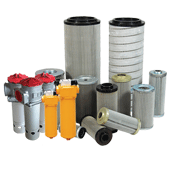
A High flow filter cartridge catalog is a complete selection manual that organizes all specifications, variants and performance data of high-flow filter cartridges for industrial liquid filtration. The high flow filter cartridge itself is a large-diameter pleated filter element built for high-throughput filtration systems. Different from small standard cartridges, it adopts radial pleated structure to expand filtration area greatly. One single high flow filter cartridge can replace multiple conventional small filter cartridges, which simplifies filter housing layout and reduces the total number of spare parts. This catalog sorts out different media types, micron ratings, length options and end-cap styles, so customers can quickly locate the suitable model for their fluid treatment projects. It acts as a bridge between technical requirements and on-site procurement, supporting both new skid design and existing system retrofit.
2. Application Scenarios
The product range listed in the High flow filter cartridge catalog fits a wide range of industrial liquid filtration duties. The most common application is RO system pretreatment, removing sediment, rust and suspended particles to protect reverse osmosis membranes. It is widely used in seawater and brackish water desalination projects, power plant boiler make-up water and cooling water loops, microelectronics ultra-pure water production, food and beverage process water, pharmaceutical purified water, chemical solvent filtration, wastewater recycling and textile water treatment. In these scenarios, the high flow filter cartridge stabilizes feed water quality, avoids sudden membrane fouling, and lowers the frequency of chemical cleaning. Users can check the catalog to match fluid property, temperature and contamination level before confirming the final model.
3. Technical Parameters
All parameter data is clearly recorded in the High flow filter cartridge catalog. The standard outer diameter is 6 inches (152 mm), with available lengths of 20, 30 and 40 inches. Filtration area of a single 40-inch cartridge reaches 12–16 m². Micron ratings cover 1 μm to 100 μm, with 5 μm and 10 μm absolute grades most popular for RO prefiltration. The standard material is polypropylene media and support core, working temperature up to 80°C. Optional glass fiber media can be selected for high-temperature fluid. Rated working pressure is 10 bar, maximum allowable differential pressure is 2.4 bar. End-cap interfaces include 222, 226 and flat seal types to match standard large-flow filter housings. Single cartridge flow capacity can reach up to 60 m³/h under clean water conditions. Every parameter table inside the catalog helps engineers finish hydraulic calculation and housing sizing.
4. Product Advantages
The High flow filter cartridge catalog highlights the core competitive advantages of this series. First, the large pleated filtration area brings low initial pressure drop and long service life, effectively reducing pumping energy consumption. Second, high dirt holding capacity means fewer cartridge replacements, cutting labor cost and spare part expense. Third, fewer cartridges are required for the same flow rate, which shrinks the filter skid footprint and simplifies pipeline design. Fourth, all-polypropylene thermally bonded structure contains no extra adhesive, so it will not release impurities into filtrate. Fifth, multiple material and end-cap options are available for customized demands. Compared with traditional multi-cartridge systems, the whole solution shows better stability and lower overall operating cost.
5. Application Procedures
The High flow filter cartridge catalog also contains clear operation guidance for field teams. Before ordering, users confirm fluid type, temperature, target flow, inlet turbidity and downstream protection requirement to select micron rating and length from the catalog. During installation, isolate the filter housing, release internal pressure, inspect O-ring condition and seat the new high flow filter cartridge correctly to prevent bypass. Slowly open the inlet valve to exhaust air and avoid hydraulic shock. Record initial pressure difference after commissioning. During running, monitor differential pressure continuously. When the pressure difference reaches the set limit, stop the system and replace the cartridge. The catalog reminds operators not to reuse depth-type pleated cartridges after backwashing, as the internal pore structure cannot be fully restored.
6. Quality Standards
All products listed in the High flow filter cartridge catalog are manufactured under standardized quality control. The production system follows ISO 9001 quality management rules. Polypropylene wetted materials comply with FDA 21 CFR 177.1520 for food and beverage contact. Pharmaceutical grades meet USP Class VI biocompatibility requirements. Every finished high flow filter cartridge undergoes bubble point integrity test and leakage inspection before packing. Batch traceability is supported, and test certificates, material data sheets can be provided upon request. The catalog marks the applicable standard for each variant, helping customers in regulated industries meet site audit and compliance requirements.
7. Working Principle
The high flow filter cartridge adopts graded-density depth filtration principle, which is explained in detail in the High flow filter cartridge catalog. Untreated liquid flows from outside of the pleated media inward to the central perforated core. The outer fiber layer has larger pores to trap coarse sediment, rust and large suspended solids. Inner fine fiber layers capture smaller colloids and fine silt. The gradient pore design makes full use of the whole media thickness for particle retention instead of only surface interception. The pleated design greatly increases effective filtration area and lowers face velocity, so the pressure difference rises slowly and predictably. This mechanism guarantees stable filtration performance and excellent dirt holding capacity.
8. Future Prospects
The market demand for products in the High flow filter cartridge catalog keeps growing with global water treatment development. Water reuse, zero liquid discharge and desalination projects expand rapidly, pushing plant owners to pursue high-capacity, low-maintenance prefiltration solutions. Stricter environmental regulations also raise requirements for filtration accuracy and product traceability. Future optimization directions include recyclable filter media, intelligent differential pressure monitoring compatible with SCADA systems, and customized composite media for special chemical fluids. The High flow filter cartridge catalog will keep updating new variants to match these emerging needs, becoming a long-term technical reference for global water treatment contractors.
9. Conclusion
The High flow filter cartridge catalog is far more than a simple product list. It integrates product specifications, selection logic, operation guidance and quality instructions, serving as a reliable technical handbook for filtration engineers and purchasers. The high flow filter cartridge inside this catalog provides high flow rate, low pressure drop and outstanding dirt holding capacity, protecting RO membranes, pumps and process equipment in many industrial sectors. With flexible configuration options and strict quality control, it can adapt to diverse water and liquid filtration projects. For any new filtration design or equipment upgrade, referring to this catalog is the first step to build a stable, cost-effective filtration system.
10. Frequently Asked Questions
Q1: What information do I need to check before selecting from the High flow filter cartridge catalog?A. You need to confirm flow rate, fluid composition, operating temperature, inlet turbidity, required micron rating and filter housing interface type.
Q2: Which micron rating is recommended for RO pretreatment?A. 5 μm absolute is the most common choice for RO protection. For cleaner feed water, 10 μm can be considered.
Q3: Can these cartridges be used for seawater filtration?A. Yes, standard polypropylene versions are compatible with seawater. For high silt intake, add pre-filtration to extend service life.
Q4: How long is the normal service cycle?A. It depends on raw water quality. Normally, replacement is required when differential pressure reaches 1.5–2.4 bar.
Q5: Can I customize the cartridge size or material?A. Customized length, media and end-cap types are available. You can send your technical requirements for non-standard models.