Pleated High Flow Filter Cartridges: A Comprehensive Application and Technical Guide
1. Product Introduction
If you have ever worked in water treatment, petrochemical processing, or any industrial fluid system, you know that filtration is rarely the glamorous part of the job — but it is often the difference between smooth operation and costly downtime. Over the years, I have watched filtration technology evolve, and few upgrades have delivered the kind of practical, day-to-day value that the pleated high flow filter cartridge brings to the table.
Simply put, a
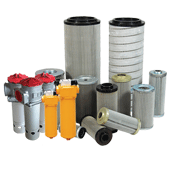
pleated high flow filter cartridge is a depth- and surface-type filter element that uses a large area of pleated filter media folded around a perforated core. Instead of relying on a thick, single-pass block of media, it spreads the filtering surface across hundreds of pleats. This simple geometric trick dramatically increases the usable filtration area inside a standard-size housing, which is precisely why these cartridges have become a workhorse in modern industrial filtration.
What makes the high flow filter cartridge stand out is that it achieves high flow rates with fewer elements. In many installations, a handful of these cartridges can replace a whole rack of smaller traditional filter bags or string-wound cartridges. That means a smaller footprint, lower housing cost, and fewer change-outs — benefits that show up directly in operating budgets.
2. Working Principle
Understanding how a pleated high flow filter cartridge works helps you size and select it correctly. The core idea is simple: fluid enters the cartridge through the outer pleated surface, travels through the depth of the filter media where particles are trapped, and exits through the inner perforated core toward the clean-fluid outlet.
The pleating does two things at once. First, it multiplies the effective filter area — a cartridge with a nominal length can expose several times more media than its outer diameter suggests. Second, it lowers the pressure drop across the element. Because the fluid passes through a much larger area at any given moment, the flow velocity through the media stays low, particles embed more evenly, and the cartridge holds more dirt before reaching its terminal pressure drop. The result is longer service life and more consistent filtration quality.
Depending on the media, these cartridges can work in either surface-filtration mode (where particles are captured on the outer surface and shed as they build up) or depth-filtration mode (where particles are captured throughout the media thickness). Most industrial high flow filter cartridges use a depth-media construction with graded pore structure, giving them both high dirt-holding capacity and good filtration efficiency across a range of particle sizes.
3. Technical Parameters
Let me walk through the parameters that matter most when you are specifying a pleated high flow filter cartridge:
Filtration rating: typically from 0.5 to 100 microns, with common ratings at 1, 5, 10, 20, 40 and 70 µm.
Flow capacity: a single 40-inch element can often handle flows of 660 to 1360 L/min (about 175 to 360 GPM), which is why fewer elements are needed.
Media area: a 40-inch cartridge commonly offers 4 to 6 m² of effective filtration area.
Max operating temperature: usually 80 °C for polypropylene media, and higher for PTFE or other specialty media.
Max differential pressure: typically 2.1 bar (30 psi) at 20 °C, with burst ratings significantly higher.
Outer / inner diameters: commonly 6-inch / 3.5-inch and 4.5-inch / 1.5-inch configurations.
Lengths: 20, 40 and 60 inches are the standard options, with custom lengths available.
These figures will vary by manufacturer and media type, so always confirm the datasheet for your specific application. But the general message holds: a high flow filter cartridge is designed to move large volumes while keeping filtration quality intact.
4. Product Advantages
The reasons I keep recommending pleated high flow filter cartridges come down to a few practical, measurable advantages:
Fewer elements, smaller footprint. Because each cartridge carries so much filter area, you need far fewer of them. That shrinks the housing, the piping, and the space you have to dedicate to filtration.
Lower total cost of ownership. Fewer elements means fewer change-outs, less labor, less disposal cost, and less downtime.
Lower pressure drop. The large surface area keeps pressure drop low even at high flow, which saves pumping energy over the life of the element.
Higher dirt-holding capacity. The pleated depth media captures more contaminant before it needs replacement, extending the change-out interval.
Easier, cleaner change-outs. Many designs use a self-sealing core with O-ring or gasket seals, so replacing an element is quick and avoids fluid bypass.
For operators, the single most attractive feature is the combination of high throughput and long life. You simply change fewer cartridges, less often, and spend less money doing it.
5. Application Scenarios and Functions
The versatility of a high flow filter cartridge is one of its best-kept secrets. In my experience, the same basic element shows up across remarkably different industries:
Water treatment — pre-filtration for reverse osmosis and ultrafiltration systems, municipal water, and boiler feed water, protecting downstream membranes and equipment.
Petrochemical and oil & gas — removing particulates from process water, amine solutions, and cooling water before they reach pumps, valves, and heat exchangers.
Power generation — filtering condensate, makeup water, and cooling tower water to protect turbines and boiler internals.
Food and beverage — polishing water and process fluids where purity directly affects product quality and safety.
Pharmaceutical and fine chemicals — protecting sensitive processes from particulate contamination.
Across all these applications, the function is consistent: protect downstream equipment, maintain product quality, and keep fluid systems running with minimal maintenance. That is the real job of the cartridge — quietly ensuring everything else keeps working.
6. Quality Standards
Quality is not a slogan; it is what separates a cartridge that performs for years from one that fails in weeks. A reliable pleated high flow filter cartridge should be manufactured under controlled conditions and tested against recognized standards.
Key considerations include the quality of the media and core, the integrity of the pleating and bonding, and the reliability of the end-cap and seal design. Many manufacturers test cartridges for flow rate, pressure drop, and filtration efficiency under standard conditions, and some hold certifications for food-contact or potable-water applications. I always recommend confirming the cartridge's pressure, temperature, and compatibility ratings against your system's actual conditions before installation, and asking for the manufacturer's test documentation as part of good procurement practice.
7. Future Prospects
Looking ahead, I believe the pleated high flow filter cartridge will only grow more important. Global demand for clean water, stricter environmental regulations, and the push toward higher process efficiency all favor filtration systems that use fewer resources and deliver consistent results.
The near future will likely bring better media materials — finer fibers, higher-temperature options, and media engineered for specific contaminant profiles. We are also seeing smart-monitoring integration, where sensors track differential pressure and predict change-out timing, reducing unplanned downtime. In short, the cartridge itself will keep improving, and the way we use it will become smarter.
8. Conclusion
If you are still relying on old-fashioned filter bags or string-wound cartridges, it may be time to look at the pleated high flow filter cartridge. It delivers more filtration area, higher flow, lower pressure drop, and longer service life — all in a smaller package. For operators who care about uptime, cost, and product quality, it is one of the most straightforward upgrades available in industrial filtration today. My advice is simple: size it correctly, confirm your operating conditions, and let the pleats do the heavy lifting.
9. Frequently Asked Questions (FAQ)
Q1: How often should I replace a pleated high flow filter cartridge?It depends on your contaminant load and flow rate. The standard rule is to change it when the differential pressure reaches the manufacturer's recommended limit — typically around 2.1 bar (30 psi). If you see a steady pressure rise, that is your signal.
Q2: Can one cartridge replace multiple traditional filter bags?Very often, yes. A single high-flow element can carry the flow of several smaller bags or string-wound cartridges, which is why installations shrink so dramatically.
Q3: What media should I choose?Polypropylene is the most common all-round choice for water and many chemical streams. For high-temperature or aggressive-chemical applications, consider PTFE or other specialty media. Always match the media to your fluid chemistry and temperature.
Q4: Do I need a new housing to use these cartridges?Usually the cartridge is designed to fit standard high-flow housings. Check the outer diameter, length, and seal type against your existing housing, and you can often retrofit without major changes.
Q5: How do I verify filtration efficiency?Ask the manufacturer for test data under recognized standards, and if your application is critical, consider running a particle-count test on the downstream fluid during commissioning.