Product Introduction

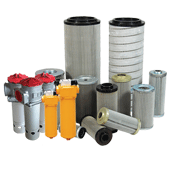
As a widely used industrial water filter, the high flow filter cartridge is installed inside the water filter housing for solid impurity removal, and can work together with a self-cleaning filter to form multi-stage pretreatment for RO systems. High flow filter cartridges are mainly made of PP or glass fiber filter media, and these two materials show totally different performance under various water quality and temperature environments. Many project engineers simply pick one material without analyzing working conditions, resulting in unexpected filter failure. Import filter suppliers provide both PP and glass fiber options, but high price and long delivery cycle increase project costs. Our factory supplies high flow filter cartridges with PP and glass fiber media as drop-in replacements for mainstream imported brands. Proper material selection can extend filter service cycles, reduce maintenance cost and provide reliable protection for downstream RO membranes.
Working Principle
For PP High Flow Filter Cartridge:
Polypropylene is a thermoplastic polymer. Raw water flows from outside to inside through pleated PP media. Suspended solids, silt and organic particles are captured by the depth filtration structure of PP material. PP media relies on physical interception, and it has excellent chemical inertness against most acids, alkalis and oxidant-free water.

For Glass Fiber High Flow Filter Cartridge:
Glass fiber media consists of fine glass fiber layers, forming a dense three-dimensional depth filtration structure. It can capture finer submicron particles effectively. Glass fiber maintains stable filtration efficiency at higher temperature, but it is sensitive to strong alkali and some high-concentration chemical oxidants.
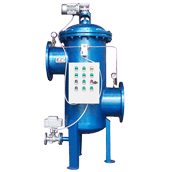
A self-cleaning filter installed upstream removes large sand and coarse sediment in advance, reducing particle load for both types of high flow filter cartridges and slowing differential pressure rise.
Material Comparison Reference Table
| Comparison Item | PP High Flow Filter Cartridge | Glass Fiber High Flow Filter Cartridge |
|---|
| Main Material | Polypropylene | Borosilicate Glass Fiber |
| Filtration Type | Depth filtration | High-performance depth filtration |
| Typical Micron Range | 1~50 μm | 0.5~20 μm |
| Max Continuous Temperature | 80℃ | 120℃ |
| Chemical Resistance | Resistant to most acids, alkalis, no resistance to strong oxidants | Good resistance to acid; poor tolerance for strong alkaline liquid |
| Particle Capture Capacity | Good for silt, organic matter, large suspended solids | Excellent for fine colloids, submicron particles |
| Fiber Shedding Risk | Very low | Slight risk under extreme pressure surge |
| Cost | Lower | Higher |
Core Advantages of Reasonable Material Selection
1. Match Media Chemical Property With Raw Water Composition
PP material is inert for most general industrial water. Glass fiber is preferred for high-temperature and slightly acidic water, but should be avoided in strong alkaline working conditions to prevent media corrosion.
2. Meet Different Precision Requirements for RO Pretreatment
Glass fiber can intercept finer tiny particles for high-purity water projects. PP media is the cost-effective choice for general river water, groundwater and circulating water pretreatment.
3. Adapt to System Operating Temperature
When raw water temperature exceeds 80℃, glass fiber high flow filter cartridge is the better option, as PP media will soften and deform under over-temperature conditions.
4. Reduce Unexpected Filter Failure and Particle Bypass
Wrong material selection may cause media breakdown and fiber shedding, bringing fine contaminants into RO membranes and causing irreversible fouling.
5. Combine With Self Cleaning Filter to Optimize Filtration Performance
No matter PP or glass fiber high flow filter cartridge, using a self-cleaning filter as primary pretreatment can remove large particles, reduce pollutant load and extend filter service life.
Application Scenarios

PP High Flow Filter Cartridge:
General groundwater RO pretreatment, surface river/lake water, cooling circulating water, food & beverage process water, wastewater reuse
Glass Fiber High Flow Filter Cartridge:
High-temperature geothermal water, high-temperature boiler feed water, fine chemical water treatment, submicron particle removal
Both optional:
Industrial raw water pretreatment with moderate temperature and neutral pH
FAQ
Q1: Which material has better chemical resistance, PP or glass fiber?
A1: PP has better comprehensive chemical resistance. It is stable in acid and weak alkaline water. Glass fiber will be corroded under strong alkaline environments.
Q2: Can glass fiber high flow filter cartridge capture smaller particles than PP?
A2: Yes. Glass fiber media can achieve lower micron rating down to 0.5μm, which is suitable for capturing submicron colloidal particles.
Q3: Is glass fiber always better than PP for RO pretreatment?
A3: No. Glass fiber costs more and has limits on alkaline water. For normal temperature neutral raw water, PP high flow filter cartridge is more cost-effective.
Q4: Can I mix PP and glass fiber cartridges inside one water filter housing?
A4: Not recommended. Different clogging speed and flow resistance will cause uneven flow distribution and affect overall filtration performance.
Q5: Which one should I choose for high-temperature geothermal water?
A5: Glass fiber high flow filter cartridge is preferred for temperature above 80℃. If temperature is below 80℃, PP type can also work normally.
Related Products
Equivalent ALN01-60B High Flow Cartridge for Ultrafiltration
RTM41HF050E High Flow Filter Element
3M High Flow Filter Cartridge
MFNP050‑40N‑ITT Cartridge Filters
Parker RCP100‑20EPP for Industrial Ultrafiltration Pretreatment