ESPA2-8040: A Deep Dive into High-Performance Reverse Osmosis Technology
This article explores the ESPA2-8040 reverse osmosis membrane, highlighting its critical role in water treatment. It is primarily used for the desalination of brackish water, groundwater, and municipal water to produce high-purity water for industrial and commercial applications.

The ESPA2-8040 represents a significant advancement in reverse osmosis technology, specifically engineered to balance high water permeability with exceptional salt rejection at ultra-low operating pressures. As a composite polyamide membrane, it is designed to treat water sources with total dissolved solids (TDS) up to 2000 ppm. Its primary function is to provide a cost-effective, energy-efficient solution for producing high-purity water. By reducing the required operating pressure by approximately 25-40% compared to conventional low-pressure membranes, it significantly lowers energy consumption and operational costs without compromising water quality. This makes it an ideal choice for applications ranging from boiler feed water, beverage production, and pharmaceutical manufacturing to general industrial purification.
Product Introduction

In the field of industrial water treatment, the ESPA2-8040 is an iconic reverse osmosis (RO) membrane element. Manufactured from aromatic polyamide composite material, it is specifically designed to treat water sources with low to moderate salinity. The core design philosophy of this membrane element is to achieve high permeate flux while maintaining extremely high salt rejection at very low operating pressures. This characteristic makes it the preferred solution for many industries that require high-purity water and are sensitive to energy consumption.
Application Scenarios

The application range of the ESPA2-8040 is very extensive, primarily due to its efficient desalination capability and cost-effectiveness.
Boiler Feed Water: In the power and chemical industries, high-pressure boilers have extremely stringent requirements for inlet water quality. The ESPA2-8040 effectively removes ions from water, preventing boiler scaling and corrosion.
Beverage and Food Processing: Whether for bottled water, beer brewing, or food processing, a stable source of high-quality water is the foundation of product taste and safety. This membrane effectively removes odors and impurities.
Pharmaceutical Industry: Pharmaceutical production requires process water of extremely high purity. The high salt rejection (up to 99.7%) of the ESPA2-8040 can meet strict pharmacopoeia standards.
Electronics Industry: In chip manufacturing and circuit board cleaning, even trace ions in water can affect product quality. This membrane serves as a crucial pretreatment or final stage in the production of ultrapure water.
Brackish Water Desalination: For underground brackish water with TDS below 2000 ppm, it provides an economically viable desalination solution.
Technical Specifications
Understanding specific technical parameters is crucial for system design and selection. Below are the typical performance data for the ESPA2-8040 under standard test conditions:
| Parameter Item | Specification Value |
|---|
| Model | ESPA2-8040 |
| Membrane Material | Aromatic Polyamide Composite |
| Effective Membrane Area | 400 sq. ft. (37.2 sq. meters) |
| Stabilized Salt Rejection | 99.6% (Average) |
| Minimum Salt Rejection | 99.5% |
| Permeate Flow Rate | 9,000 GPD (34.1 cubic meters/day) |
| Operating Pressure | 150 psi (1.05 MPa) |
| Maximum Operating Pressure | 600 psi (4.14 MPa) |
| Maximum Operating Temperature | 45°C |
| Feed Water pH Range | 2 - 10 (Continuous Operation) |
| Feed Water Chlorine | < 0.1 mg/L |
Product Advantages
The ESPA2-8040 holds a significant position in the market, largely due to the following core advantages:
Ultra-Low Pressure Operation, Significant Energy Savings: This is its most prominent feature. Its operating pressure is only 2/3 that of conventional low-pressure composite membranes, representing a 25-40% reduction. This means smaller booster pumps can be used, directly reducing the system's power consumption and operating costs.
Coexistence of High Flux and High Salt Rejection: Traditionally, high flux was thought to come at the expense of salt rejection, but the ESPA2-8040 breaks this balance. While providing a permeate flow of up to 9,000 GPD, it still maintains a stable salt rejection rate of 99.6%.
Reduced System Investment Cost: Due to the high permeate flow of a single element, fewer membrane elements are required when designing a system for the same output. This not only reduces the number of pressure vessels, piping, and valves but also shrinks the equipment footprint, thereby lowering initial capital investment.
Anti-Fouling Design: The membrane surface is electrically neutral, and the structural design helps mitigate biofouling and colloidal fouling, extending the membrane's service life and cleaning cycles.
Applications (System Design & Operation)
In actual system integration, the ESPA2-8040 demonstrates great flexibility.
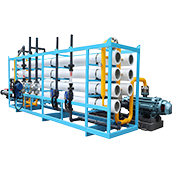
System Configuration: When designing an RO system, engineers can flexibly configure the number of membrane elements based on permeate flow requirements. Due to its high-flux characteristics, fewer pressure vessels are often needed to achieve the target yield.
Startup and Cleaning: During startup, ensure the feed water is free of residual chlorine, as polyamide membranes are highly sensitive to oxidants. Chemical cleaning is recommended when the differential pressure across the membrane increases or the permeate flow drops by 10-15%. The wide cleaning pH range (1-12) ensures suitable cleaning solutions for different types of foulants (such as calcium carbonate scale, metal oxides, or organics).
Maintenance: It is advisable to regularly inspect O-rings and brine seals to prevent leaks that could lead to reduced salt rejection. During shutdowns, a preservation solution (such as sodium bisulfite) should be used for storage to prevent microbial growth.
Quality Standards
The production of ESPA2-8040 adheres to strict international quality standards. Each membrane element is vacuum-sealed in packaging with a preservation solution before leaving the factory to prevent drying and microbial growth. The tolerance for effective membrane area is controlled within ±3%, and the permeate flow tolerance is within ±15%. This consistency ensures that the performance of each membrane is predictable and stable in large-scale system applications.
Working Principle
Reverse osmosis is a separation technology utilizing a semi-permeable membrane. The ESPA2-8040 uses its dense aromatic polyamide active layer to allow water molecules to pass through under pressure drive, while retaining dissolved salts, colloids, bacteria, viruses, and organic matter in the water. Its pore structure is extremely small (nanometer scale), capable of blocking the vast majority of impurities. Due to its membrane surface characteristics, the flow resistance of water molecules on the membrane surface is low, thereby achieving high flux under low pressure.
Future Prospects
With the global emphasis on energy conservation, emission reduction, and environmental protection, the prospects for "low-carbon" membrane elements like the ESPA2-8040 are very broad. The future trend in water treatment will focus more on energy efficiency ratios. The ESPA2-8040 not only has a solid position in the industrial sector but, with technological iterations, its improved products will further broaden its application in wastewater reuse and difficult-to-treat water sources. It represents the trend of reverse osmosis technology developing towards greater efficiency and environmental friendliness.
Conclusion
In summary, the ESPA2-8040 is a reverse osmosis membrane element that integrates energy saving, efficiency, and economy. By reducing operating pressure and the number of membrane elements used, it brings significant direct economic benefits to users. At the same time, its excellent desalination performance and anti-fouling capabilities ensure long-term operational stability. For any project requiring the treatment of water sources with low to moderate salinity, the ESPA2-8040 is a highly competitive choice.
Frequently Asked Questions
Q1: What is the maximum feed water temperature the ESPA2-8040 can withstand?
A1: The maximum feed water temperature is 45°C. However, in actual operation, it is recommended to control it around 25°C for optimal performance, as excessively high temperatures may accelerate membrane hydrolysis.
Q2: What impact does residual chlorine in the feed water have on the membrane?
A2: Polyamide membranes are very sensitive to oxidants. If the residual chlorine concentration in the feed water exceeds 0.1 mg/L, it will cause oxidative degradation of the membrane sheet and a permanent drop in salt rejection. Therefore, an activated carbon filter or reducing agent must be installed before the RO system.
Q3: Is this membrane suitable for treating seawater?
A3: It is not recommended. The ESPA2-8040 is主要针对 (primarily targets) brackish water or surface water with TDS below 2000 ppm. Seawater TDS is typically around 35,000 ppm, requiring specialized high-pressure seawater desalination membranes (such as the SWC series).
Q4: What is the permeate flow tolerance for this membrane?
A4: The permeate flow tolerance for a single membrane element is typically within ±15%, which is the industry standard range.