RO membrane manufacturer: High-performance Water Purification Solutions for Global Industries
This article explores the core technologies of a leading RO membrane manufacturer, detailing their advanced Reverse Osmosis Membrane products. These solutions are pivotal for Seawater Desalination, Industrial Wastewater Reuse, and Ultrapure Water Production, effectively removing dissolved solids, bacteria, and organic pollutants to ensure water security and sustainability.
Product Introduction: The Core of Separation

At the heart of our operations lies the Reverse Osmosis Membrane, a marvel of material science. Our flagship product is the Thin Film Composite (TFC) Membrane. Unlike traditional cellulose acetate membranes, our TFC membranes utilize a proprietary Polyamide (PA) active layer. This layer is engineered through a precise interfacial polymerization process, creating a dense network capable of rejecting a vast spectrum of contaminants while maintaining high water permeability.
We offer a diverse range of elements, from standard 8040 Industrial RO Membranes for large-scale plants to specialized High-Pressure RO Membranes designed for extreme conditions. Whether it is a Low Fouling Membrane for challenging wastewater or a High-Rejection Membrane for ultrapure water needs, our product line is built on a foundation of rigorous R&D and material innovation.
️ Working Principle: The Science of Osmotic Pressure

To understand the value of an RO membrane manufacturer, one must grasp the physics at play. Reverse Osmosis is the reversal of natural osmotic flow. In nature, water moves from a low solute concentration to a high one. By applying external pressure greater than the Osmotic Pressure on the high-concentration side (the feed water), we force water molecules to pass through the semi-permeable membrane to the permeate side.
Our membranes act as a molecular sieve. The pore size of the active layer is on the scale of nanometers . This allows water molecul to pass through while blocking larger hydrated ions, organic molecules, and microorganisms. The efficiency of this process is governed by the solution-diffusion model, where water dissolves into the membrane material and diffuses through it under the pressure gradient.
Application Scenarios

The versatility of our RO membrane technology allows it to serve critical roles across various sectors:
Seawater Desalination: In coastal regions, our High-Pressure RO Membranes are the backbone of municipal water supply. They withstand the immense pressure required to overcome the high osmotic pressure of seawater (approx. 27 bar) and effectively remove Boron and Sodium Chloride.
Industrial Wastewater Reuse: For industries like textiles and electronics, water is a precious resource. Our Anti-fouling Membranes are designed with a hydrophilic surface coating that repels organic contaminants and biofilms. This allows for the treatment of high-COD wastewater, enabling a "Zero Liquid Discharge" approach.
Ultrapure Water Production: The electronics and pharmaceutical industries require water with near-zero conductivity. Our High-Rejection Membranes serve as the primary demineralization step, removing ionic impurities to protect downstream polishing resins and EDI modules.
Product Advantages
Low Energy Consumption: Through optimized channel spacer design, we reduce the pressure drop across the membrane element. This "Low Energy RO" design significantly lowers the electricity consumption of high-pressure pumps, reducing the carbon footprint of the plant.
Superior Fouling Resistance: We utilize a unique surface modification technique that increases the hydrophilicity of the membrane surface. This creates a hydration barrier that prevents the adhesion of colloids, bacteria, and organic matter, extending the cleaning intervals.
Wide pH Tolerance: Our membranes can withstand a wider pH range during chemical cleaning (CIP), allowing for more aggressive removal of scale or biological fouling without damaging the active layer.
️ Applications and Procedures
Implementing our membranes requires a systematic approach to ensure longevity:
Pretreatment: This is the "lifeline" of the RO system. Feed water must pass through multimedia filters and cartridge filters to ensure the Silt Density Index (SDI) is less than 5 (ideally < 3). This prevents physical clogging.
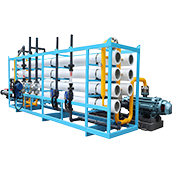
System Design: The membranes are arranged in a pressure vessel in a specific array (e.g., 2:1 ratio) to balance the flux across the stages.
Operation: We recommend maintaining a recovery rate of 75% for brackish water and 40-50% for seawater to prevent concentration polarization and scaling.
Maintenance: Regular monitoring of differential pressure and normalized permeate flow is essential. When performance drops by 10-15%, a Clean-In-Place (CIP) procedure is initiated using mild acids or alkaline detergents.
️ Quality Standards
As a responsible RO membrane manufacturer, we adhere to the strictest quality protocols. Our production facilities operate under ISO 9001 standards. Every membrane element undergoes automated testing to verify flow and rejection rates before leaving the factory. Our products are certified by NSF/ANSI 61 for drinking water safety and comply with CE and RoHS directives, ensuring they are free from hazardous substances.
Future Prospects
The future of the RO membrane manufacturer lies in "Smart Water." We are currently integrating IoT sensors into membrane housings to monitor real-time performance data. This allows for predictive maintenance, where AI algorithms can predict fouling events before they occur. Furthermore, we are researching biomimetic membranes that mimic aquaporins to achieve water permeability rates that exceed current physical limits.
Conclusion
In summary, our Reverse Osmosis Membrane solutions offer a robust, efficient, and sustainable path to water purification. By combining advanced material science with practical engineering, we provide products that not only meet but exceed the demanding requirements of modern industry. We are not just selling filters; we are delivering the promise of clean water for generations to come.
Frequently Asked Questions (FAQ)
Q1: What is the typical lifespan of an RO membrane?
A: With proper pretreatment and maintenance, our industrial membranes typically last 3 to 5 years. In severe wastewater applications, this may be 2-3 years, while in gentle groundwater applications, it can extend beyond 5 years.
Q2: How often does the membrane need to be cleaned?
A: Generally, cleaning is required when the normalized permeate flow drops by 10-15% or the pressure drop increases by 15%. With our anti-fouling technology, cleaning frequency is often reduced to 2-4 times per year.
Q3: Can this membrane remove viruses and bacteria?
A: Yes. The pore size of the TFC Membrane is significantly smaller than viruses and bacteria. An RO system typically achieves a Log Reduction Value (LRV) of >4 for microbiological contaminants, effectively removing them.