2. Application Scenarios

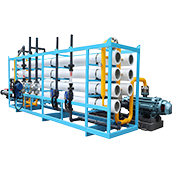
RO membrane has a wide range of application scenarios, involving household, industrial, municipal and other fields. Combined with my on-site experience, the main application scenarios are as follows:
First, household drinking water purification. For families with high requirements for drinking water quality, RO membrane can filter out harmful substances such as heavy metals and residual chlorine in tap water, providing safe and healthy drinking water for families.
Second, industrial water treatment. Industries such as electronics, chemical industry, medicine and food have high requirements for water quality.RO membrane can produce high-purity industrial water, ensuring the stability of production processes and product quality.
Third, municipal water supply. In areas with poor raw water quality, municipal water supply systems can use RO membrane for deep treatment to improve the quality of tap water and ensure the safety of residents' water use.
Fourth, environmental protection water treatment. RO membrane can be used in the treatment of industrial wastewater and domestic sewage, realizing the recycling of water resources and reducing environmental pollution.
3. Technical Parameters

Technical parameters are the key basis for choosing an RO membrane , and mastering core parameters can help avoid wrong selection. The core technical parameters of mainstream RO membrane are as follows:
Salt rejection rate : ≥99.5%, which is the core index of RO membrane , indicating the ability to intercept salts in water;
Permeate flow rate : 100-4000 L/d (household type) and 5-20 m³/d (industrial type), which needs to be selected according to actual water demand;
Operating pressure : 15-60 bar, household RO membrane is usually 15-30 bar, and industrial high-pressure RO membrane is 30-60 bar;
Operating temperature: 5-45℃, too high or too low temperature will affect the water production effect;
pH range: 2-11 (continuous operation), with strong chemical stability;
Effective membrane area: 0.1-10 ㎡, which is related to the permeate flow rate ;
Feed water requirement: SDI (15 minutes) ≤5.0, turbidity ≤0.5 NTU, free chlorine concentration <0.1 ppm, avoiding membrane damage.
4. Product Advantages
Compared with other water purification membranes, RO membrane has obvious core advantages, which are summarized based on my long-term application experience.
Firstly, excellent deep purification performance. With a salt rejection rate of more than 99.5%, it can effectively intercept salts, heavy metals, microorganisms and other impurities in water, and the produced water quality is stable and reliable.
Secondly, strong anti-fouling performance. The polyamide selective layer of the RO membrane is treated with anti-fouling modification, which can reduce the adsorption of pollutants, reduce the frequency of membrane cleaning, and extend the service life to 3-7 years and 5-10 years .
Thirdly, high operation stability. Adopting high-quality raw materials and precision production technology, the permeate flow rate and salt rejection rate can remain stable for a long time, reducing the maintenance cost of the system.
Fourthly, energy-saving and efficient. The optimized flow channel design reduces the operating pressure loss, saves the energy consumption of the water treatment system, and the high purification efficiency can reduce the number of treatment processes.
Fifthly, wide adaptability. It can adapt to different raw water quality and operating environments, and can be customized according to actual needs.
5. Application Procedures
The correct application procedure is not only the key to giving full play to the performance of the RO membrane , but also an important part of extending its service life. Combined with on-site operation experience, I have sorted out the specific steps:
First, pre-treatment of feed water. Filter the raw water to remove large particles of impurities, colloids and other substances to meet the inlet water requirements of the RO membrane and avoid membrane blockage.
Second, membrane installation. Check whether the RO membrane is damaged, install it in the correct direction, and ensure tight connection to avoid water leakage.
Third, system flushing. Flush the RO membrane with clean water for 20-30 minutes to remove the preservative and surface impurities on the membrane.
Fourth, system commissioning. Adjust the operating pressure , temperature and other parameters to the standard range, monitor the permeate flow rate and salt rejection rate in real time, and confirm that all indicators meet the requirements.
Fifth, daily operation. Maintain stable operating parameters, regularly monitor the water quality of inlet and produced water, and record operation data.
Sixth, regular maintenance. Clean the RO membrane with special cleaning agent every 3-6 months and 6-12 months; replace the membrane in time if the salt rejection rate drops significantly.
6. Quality Standards
The production and detection of RO membrane strictly follow international and domestic standards to ensure product quality and reliability. Internationally, it complies with ASTM D4516 (Standard Test Method for Reverse Osmosis (RO) and ISO 9001 quality management system; domestically, it complies with GB/T 30307-2013 (Reverse Osmosis Membrane Elements for Water Treatment) and GB/T 5749-2022 (Standards for Drinking Water Quality). The key quality inspection indicators include: salt rejection rate ≥99.5%, permeate flow rate within ±10% of the standard value, membrane integrity (no leakage), anti-fouling performance , mechanical strength and chemical stability. EachRO membrane must pass strict water test and performance detection before leaving the factory, and only those that meet all indicators can be put on the market.
7. Working Principle
The working principle of RO membrane is based on Reverse Osmosis (RO) technology, which is the core of its deep purification ability. Many people do not understand why RO membrane can filter out impurities. Simply put, natural osmosis is the spontaneous migration of pure water from the low-concentration side to the high-concentration side through a semi-permeable membrane, while reverse osmosis is the opposite. The RO membrane applies external operating pressure greater than the osmotic pressure of the raw water to force water molecules to move in the opposite direction—from the high-impurity raw water side through the polyamide selective layer to the low-impurity pure water side. The pore size of the polyamide selective layer is only 0.0001 μm, which can only allow water molecules to pass through, while intercepting salts, heavy metals and other impurities, thus realizing deep purification of water.
8. Future Prospects
With the increasing attention to water quality and the continuous improvement of environmental protection requirements, the market demand for RO membrane is growing, and it has broad future prospects. From the perspective of industry development, there are three main development directions:
Firstly, material innovation. The research and development of new modified polyamide selective layer materials will further improve the salt rejection rateand anti-fouling performance of the RO membrane , and reduce energy consumption.
Secondly, intelligence. RO membrane systems will be combined with Internet of Things technology to realize real-time monitoring of membrane operation status, timely remind of cleaning and replacement, and improve the convenience of operation and maintenance.
Thirdly, application expansion. It will be more widely used in new energy, environmental protection, medical and other fields, and combined with other water treatment technologies to form a more efficient and energy-saving water purification system, making greater contributions to the rational utilization of water resources.
9. Conclusion
Choosing a suitable RO membrane is crucial for ensuring water purification effect and system operation efficiency. As a core water purification component based on Reverse Osmosis (RO) technology, RO membrane has the core advantages of excellent deep purification performance, strong anti-fouling performance, high operation stability, energy saving and high efficiency, and wide adaptability. Its application scenarios cover household, industrial, municipal and environmental protection fields, playing an irreplaceable role in improving water quality and realizing water resource recycling. Its working principle relies on the selective separation effect of the semi-permeable membrane and polyamide selective layer to achieve deep purification. With the continuous advancement of water treatment technology, RO membrane will be further optimized in performance and function, and will continue to play an important role in the field of water resource utilization.
10. Frequently Asked Questions (FAQs)
Q1: What factors should be considered when choosing an RO membrane?
A1: The key factors include: salt rejection rate , permeate flow rate ,anti-fouling performance , operating pressure , and feed water quality.
Q2: How long is the service life of an RO membrane?
A2: It depends on the type and use environment. The service life of household RO membranes is usually 3-7 years, and that of industrial RO membranes is 5-10 years. Proper daily maintenance can extend the service life.
Q3: Can RO membranes be reused after cleaning?
A3: Yes. If the RO membrane is slightly polluted, it can be reused after cleaning with a special cleaning agent. However, if the salt rejection rate drops by more than 5% and cannot be recovered after cleaning, it needs to be replaced.
Q4: Is the water produced by RO membrane safe to drink directly?
A4: Yes. The RO membrane can effectively intercept harmful substances such as heavy metals, microorganisms and residual chlorine in water, and the produced water meets the drinking water standard and can be drunk directly.
Q5: What is the difference between household and industrial RO membranes?
A5: The main differences are permeate flow rate , operating pressure, effective membrane area, and service life , which are designed according to different water demand and use scenarios.