SWRO Membrane: High-Performance Solution for Seawater Desalination
Seawater Reverse Osmosis (SWRO) membranes are core components for seawater desalination, mainly applied in large-scale seawater desalination projects, municipal water supply in coastal cities and islands, domestic and production water supply for ships and offshore platforms, high-salinity industrial wastewater treatment and emergency water supply in arid coastal areas.
1. Product Introduction

Seawater reverse osmosis (SWRO) membrane is a special high-performance separation membrane specially developed for high-salinity seawater desalination. It adopts a thickened three-layer composite structure, including a high-strength polyester non-woven support layer, a dense polysulfone porous transition layer and a cross-linked aromatic polyamide functional layer. Compared with ordinary brackish water reverse osmosis membranes, SWRO membranes have higher mechanical strength, denser surface structure and stronger chemical stability, which can withstand high operating pressure and severe water quality impact. As the core component of seawater desalination projects, it can efficiently remove salt, organic matter, microorganisms and suspended solids in seawater, providing stable and reliable freshwater for coastal cities, islands, ships and industrial users.
2. Application Scenarios

SWRO membranes are mainly used in large-scale seawater desalination projects and high-salinity water treatment scenarios. In coastal cities and island areas, they are widely used in public water supply systems to alleviate freshwater shortages. In the field of ship and offshore platform engineering, they provide domestic and production water for long-term offshore operations. In the industrial sector, they are applied to high-salinity wastewater treatment and water reuse in petrochemical, electric power and marine engineering. In addition, SWRO membranes are also used in emergency water supply projects in arid coastal areas, which greatly improves the security of regional water resources.
3. Technical Parameters

Key technical parameters of SWRO membranes are formulated for high-salinity and high-pressure operating environments. The initial salt rejection rate is ≥99.6%, which can stably remove sodium chloride and other soluble salts. The operating pressure ranges from 5.5 to 8.0 MPa, matching the high osmotic pressure of seawater. The water flux is generally 16–28 L/(m²·h) under standard test conditions. The applicable operating temperature is 5–45 °C, and the pH adaptation range is 2–11. The SDI15 of inlet water shall be less than 5, turbidity less than 0.1 NTU, and residual chlorine controlled below 0.1 mg/L to avoid membrane oxidation and fouling. Under standard operating conditions, the service life can reach 3–5 years.
4. Product Advantages
The core advantages of SWRO membranes are reflected in five aspects. First, ultra-high desalination performance, with salt rejection up to 99.8% under optimized conditions, ensuring stable effluent quality. Second, excellent high-pressure resistance, with a reinforced support layer that avoids deformation and damage under long-term high-pressure operation. Third, strong anti-fouling and anti-oxidation properties, with a smooth surface that reduces dirt adhesion and extends the cleaning cycle. Fourth, high energy efficiency, which reduces energy consumption per cubic meter of water production under the same desalination effect. Fifth, stable long-term performance, with small performance attenuation and high system operation reliability.
5. Application Procedures

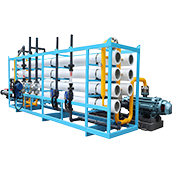
The application process of SWRO membranes is strict and standardized. First, carry out multi-stage pretreatment of seawater, including coagulation, sand filtration, carbon filtration and security filtration to reduce suspended solids and colloids. Second, install membrane elements in strict accordance with the flow direction to ensure sealing and avoid water leakage. Third, conduct low-pressure flushing and pressure-raising debugging to stabilize the system within the design pressure range. Fourth, conduct daily monitoring of pressure, flux and effluent conductivity, and perform routine flushing regularly. Fifth, carry out chemical cleaning according to fouling conditions, and replace the membrane assembly when performance cannot be recovered.
6. Quality Standards
SWRO membranes comply with international industrial water treatment standards. In terms of materials, the polyamide layer and support layer meet the requirements of pressure resistance and corrosion resistance. In performance, the initial salt rejection rate and water flux must reach the nominal index with an error within ±5%. In appearance, the membrane surface is smooth and free of defects such as pinholes and scratches. Each batch of products must undergo factory tests including pressure resistance test, desalination test and flux test, and be equipped with a quality inspection report. The packaging adopts a vacuum moisture-proof design to ensure performance during storage and transportation.
7. Working Principle
The working principle of SWRO membrane is based on reverse osmosis. Natural osmosis allows water molecules to move from low-salinity solution to high-salinity solution. By applying external pressure higher than the osmotic pressure of seawater, water molecules are forced to pass through the selective semi-permeable membrane in reverse. The membrane pores are only 0.5–0.8 nm, allowing only water molecules to pass through, while salt ions, organic molecules and microorganisms are intercepted. The charged polyamide layer further repels salt ions through electrostatic effect, achieving deep desalination and finally producing clean freshwater and concentrated brine.
8. Future Prospects
With the intensification of global water scarcity, the demand for SWRO membranes will continue to grow rapidly. Future development will focus on high-performance new materials, such as modified polyamide and nanocomposite membranes, to further improve flux and anti-fouling properties. Intelligent operation and maintenance technology combined with IoT and big data will realize real-time monitoring and life prediction. Energy recovery devices will be more integrated with membrane systems to reduce energy consumption. In developing coastal areas, large-scale desalination projects will further expand the application space of SWRO membranes, making them an important support for global water security.
9. Conclusion
SWRO membrane is a core key component in the field of seawater desalination, with outstanding advantages such as ultra-high salt rejection, high pressure resistance, strong anti-fouling property and stable operation. It plays an irreplaceable role in solving freshwater shortage in coastal and island areas, industrial high-salt water treatment and emergency water supply. With technological iteration and material innovation, SWRO membranes will develop towards higher efficiency, lower energy consumption and longer service life. It is not only an important equipment for seawater utilization, but also a strategic support for global sustainable utilization of water resources.
10. Frequently Asked Questions
Q1: What is the normal service life of SWRO membranes?
A1: Under standard operation and regular maintenance, the service life is generally 3–5 years. Poor influent quality or lack of maintenance will shorten the life to 2–3 years.
Q2: Can SWRO membranes be directly used for untreated seawater?
A2: No. Effective pretreatment must be carried out to prevent suspended solids, microorganisms and scale from blocking and damaging the membrane surface.
Q3: How to judge the performance degradation of SWRO membranes?
A3: Typical signs include decreased water flux, increased effluent conductivity, decreased salt rejection and increased differential pressure.
Q4: Can polluted SWRO membranes be reused after cleaning?
A4: Mild fouling can be recovered by chemical cleaning. Severe irreversible fouling or membrane damage requires replacement.
Q5: What is the impact of temperature on SWRO membrane performance?
A5: Too low temperature reduces flux; too high temperature will damage the polyamide layer. The optimal operating temperature is 15–35 °C.