Nominal Coalescing Rating: Cost-Effective and Reliable Coalescing Filtration Solutions for Industrial Applications
Product Introduction
In many industrial filtration systems, achieving an optimal balance between performance, cost, and operational flexibility is essential. Nominal coalescing rating describes a coalescing filter’s typical or average efficiency in removing liquid droplets and aerosols above a specified size under standard operating conditions. Unlike absolute ratings, nominal ratings provide a practical and economical solution for applications where ultra-critical risk levels are not required, yet stable and reliable separation performance remains essential.
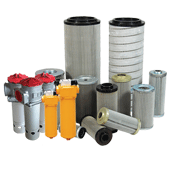
Our nominal-rated coalescing filters are designed to deliver dependable performance across a wide range of operating conditions, making them ideal for natural gas oil–gas separation, aviation fuel pre-filtration, hydraulic oil systems, and lubricating oil filtration. Through optimized media selection, balanced structural design, and consistent manufacturing quality, these products provide effective coalescence, controlled pressure drop, and long service life at a competitive cost.
These solutions are widely chosen for general industrial systems, pre-separation stages, and applications where cost efficiency and operational reliability are equally important.
Main Features and Advantages
1. Practical Nominal Coalescing Rating
· Provides reliable average droplet removal efficiency at the rated size.
· Well-suited for general industrial and pre-filtration applications.
2. Stable and Predictable Performance
· Designed to maintain consistent coalescing behavior under normal operating conditions.
· Reduces carryover risks in downstream equipment.
3. Low Pressure Drop
· Optimized fiber density ensures smooth flow and minimal energy loss.
· Supports efficient system operation and lower running costs.
4. Cost-Effective Solution
· Balanced design delivers dependable performance without unnecessary over-engineering.
· Ideal for projects with budget and lifecycle cost considerations.
5. Wide Fluid Compatibility
· Suitable for natural gas, aviation fuels, hydraulic oils, and lubricating oils.
· Compatible with mineral oils, synthetic oils, and low-sulfur fuels.
6. Durable Construction
· Reinforced internal support and bonded media maintain structural stability.
· Ensures reliable service life under typical pressure and flow conditions.
Working Principle
Nominal coalescing rating performance is achieved through a standardized multi-stage coalescing process, optimized for consistent average efficiency:
1. Inlet Flow Distribution
Contaminated fluid enters the housing and is evenly distributed across the coalescing element to avoid localized saturation.
2. Droplet Interception
Liquid droplets and aerosols are captured by the coalescing fibers through interception, diffusion, and inertial impaction.
3. Droplet Coalescence
Captured droplets merge into larger droplets as they pass through the media layers.
4. Gravity Separation
Enlarged droplets are separated from the main flow by gravity and guided to the drainage area.
5. Outlet Polishing
Remaining fine contaminants are reduced to ensure acceptable outlet cleanliness for downstream processes.
This design ensures dependable coalescing performance under typical industrial operating conditions.
Application Scenarios
1. Natural Gas Oil–Gas Separation
In natural gas systems, nominal-rated coalescers are commonly used for general separation and pre-treatment stages. They: - Remove the majority of oil mist and condensate droplets. - Protect compressors and pipelines from excessive liquid carryover. - Improve overall gas quality at an economical cost.
Typical applications include: - Gas gathering systems - Compressor inlet pre-filtration - Gas processing and transmission facilities
2. Aviation Fuel Filtration
Nominal coalescing filters are often used in aviation fuel systems as pre-filters or secondary protection stages. They provide: - Effective removal of free water and larger droplets. - Reduced contamination load on downstream fine or absolute filters. - Stable operation during fuel transfer and storage.
Applications include: - Aviation fuel storage systems - Fuel transfer and distribution pipelines - Ground support equipment
3. Hydraulic Oil Systems
In hydraulic systems, nominal-rated coalescers help maintain acceptable oil cleanliness levels by: - Removing free water and larger contaminants. - Supporting smooth and reliable system operation. - Extending component life at a controlled cost.
Used in: - Industrial hydraulic power units - Construction and material handling equipment - General-purpose hydraulic systems
4. Lubricating Oil Filtration
Nominal coalescing filters are widely applied in lubricating oil systems where ultra-fine separation is not mandatory. They: - Reduce moisture and contamination in lubricating oil. - Support stable lubrication performance. - Lower maintenance and oil replacement frequency.
Common applications include: - Gearboxes - Compressors - Industrial engines
Technical Data (Typical)
Parameter | Specification |
Nominal Coalescing Rating | 90–98% efficiency at rated droplet size |
Rated Droplet Size | 1–10 μm (customizable) |
Maximum Operating Pressure | Up to 10 MPa |
Operating Temperature | -20°C to 120°C |
Flow Capacity | Up to 6000 L/min (customizable) |
Coalescing Media | Fiberglass / Synthetic |
Housing Material | Carbon Steel / Stainless Steel |
Connection Type | Flanged / Threaded |
Technical specifications can be adjusted to meet specific application requirements.
Maintenance and Service
Nominal-rated coalescers are designed for straightforward maintenance and reliable operation:
· Differential Pressure Monitoring: Replace elements when pressure drop reaches recommended limits.
· Routine Drainage: Drain collected liquids regularly to prevent re-entrainment.
· Scheduled Replacement: Service intervals typically range from 6 to 12 months, depending on contamination levels.
· System Inspection: Inspect housings and seals during maintenance to ensure proper sealing.
Proper maintenance ensures stable performance and long service life.
Frequently Asked Questions (FAQ)
Q1: What is nominal coalescing rating?
It refers to the typical or average efficiency of a coalescing filter at the rated droplet size.
Q2: How is nominal rating different from absolute rating?
Nominal rating represents average performance, while absolute rating guarantees near-total removal above a defined size.
Q3: When should nominal-rated coalescers be used?
They are ideal for general industrial applications and pre-filtration stages.
Q4: Are nominal coalescers suitable for natural gas systems?
Yes, they are widely used in gas separation and compressor inlet protection.
Q5: Can nominal coalescers be used in aviation fuel systems?
Yes, commonly as pre-filters or secondary protection elements.
Q6: Do nominal ratings reduce pressure drop?
Nominal-rated designs typically offer lower pressure drop compared to absolute-rated filters.
Q7: How often should elements be replaced?
Replacement frequency depends on operating conditions but is generally cost-effective.
Q8: Can nominal coalescing filters be customized?
Yes, ratings, materials, and configurations can be customized.
Conclusion
Nominal coalescing rating provides a practical and cost-effective solution for a wide range of industrial filtration applications. By delivering reliable average separation efficiency, stable pressure drop, and durable construction, our nominal-rated coalescing filters meet the needs of natural gas oil–gas separation, aviation fuel pre-filtration, hydraulic oil systems, and lubricating oil applications.
These solutions offer an excellent balance between performance and cost, making them a dependable choice for general-purpose and pre-treatment filtration systems.