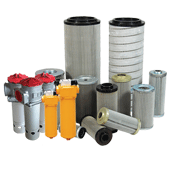
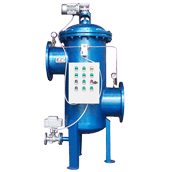
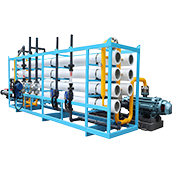
Beyond Basic Filtration: What Truly Defines High Efficiency Coalescing?
In industrial fluid treatment, “coalescing” is a common term, but “High Efficiency Coalescing” represents a distinct performance tier crucial for safeguarding sensitive equipment and ensuring product purity. It transcends mere liquid removal, delivering predictable, reliable, and superior results in the most demanding applications.
The Three Pillars of High Efficiency Coalescing
Separation Efficiency: The Primary Metric
This is measured as the percentage of contaminant (liquid aerosol or fine solid) removed. Truly high-efficiency systems, like those from Lefilter, consistently achieve >99.9% efficiency on particles and droplets down to 0.1 micron in size. This level is non-negotiable for protecting turbines, sensitive membranes, or ensuring LNG calorific value.
Low Pressure Drop & High Dirt Holding Capacity: The Sustainability Metric
Efficiency shouldn’t come at the cost of frequent changeouts. High-efficiency coalescers are engineered with optimized media packs and structural designs to:
Maintain a lower initial pressure drop, reducing energy consumption.
Exhibit a gradual pressure drop increase over time, indicating high dirt/contaminant loading capacity. This extends service life and lowers total operating costs.
Integrity & Consistency: The Reliability Metric
High efficiency must be sustained. It requires:
Robust Construction: Prevention of media migration or bypass under pulsating or high-differential pressure conditions.
Material Stability: Compatibility with process fluids (hydrocarbons, chemicals, cryogenic temperatures) without degradation.
How Lefilter Achieves True High Efficiency
Our approach is holistic, focusing on the entire filter system:
Pre-Filtration Matching: We design prefilters to remove bulk contaminants, preventing premature loading of the high-efficiency final coalescer.
Media Science: We select and layer specialized glass fiber, polymer, or PTFE media to create an optimized gradient density structure for progressive coalescence.
Rigorous Testing: Every design is validated using industry-standard multi-pass tests (like ISO 4548-12 for liquids) and challenge tests with certified contaminants.
Where High Efficiency is Non-Optional:
Aviation Fuel (Avjet) Treatment: To prevent aircraft fuel system icing.
Natural Gas Pipeline Transmission: Protecting compressors and meeting pipeline specs.
Pharmaceutical Process Gases: Ensuring sterile conditions.
High-Purity Chemical Production.