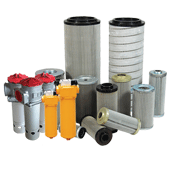
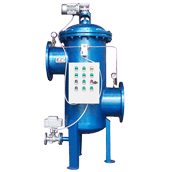
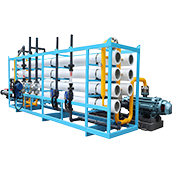
Phase Separation Filter Element: The Advanced Engine for Multi-Phase Filtration
A Phase Separation Filter Element is a highly engineered filtration cartridge designed to perform the critical task of separating different phases of matter from a primary fluid stream. While coalescers primarily target liquid aerosols, a phase separation element is engineered for broader application, effectively removing entrained liquids (oil, water) from gases, separating immiscible liquids (oil from water), and capturing solid particulates—all within a single, sophisticated unit. It is the core component in achieving superior fluid purity, protecting downstream processes, and ensuring operational integrity. Lefilter manufactures premium Phase Separation Filter Elements that deliver unmatched efficiency and reliability for the most complex industrial fluid challenges.
How a Phase Separation Filter Element Works
This specialized element leverages a combination of advanced mechanisms to achieve multi-phase separation, with a strong emphasis on enhanced gravity separation through coalescence. The process typically occurs in stages:
Depth Filtration & Coalescence Stage: The contaminated fluid enters the element's outer layer, where depth filtration media captures and retains solid particles. Concurrently, the fluid passes through a specially treated coalescing media layer. Here, fine, dispersed droplets (e.g., oil in gas, water in fuel) are forced to collide with the media fibers, coalescing into larger, heavier droplets. This step is crucial for amplifying droplet size to facilitate the next stage.
Agglomeration & Gravity Separation Stage: The enlarged droplets exit the media and enter a designed separation/collection zone within the element or housing. Due to the significant increase in droplet size, the force of gravity (or centrifugal force in some designs) easily overcomes the fluid drag. The different phases rapidly separate based on density: oil rises, water settles, and the clean primary fluid continues its path.
Drainage & Containment: The separated phase is directed to a dedicated collection area (e.g., a sump in the filter housing) and is automatically or manually drained. A final barrier mesh may be present to prevent re-entrainment of the separated liquids, ensuring only clean, single-phase fluid exits the system.
Key Features & Operational Advantages
Our Phase Separation Filter Elements are designed to solve complex contamination problems, offering distinct benefits over standard filters:
True Multi-Phase Removal: Engineered to handle gas-liquid-solid or liquid-liquid-solid mixtures simultaneously, providing a comprehensive purification solution in one compact unit.
High-Efficiency Coalescing & Separation: Achieves exceptional removal rates (>99.9%) of sub-micron liquid droplets and fine solids, resulting in extremely dry gases and clean, single-phase liquids.
Superior Surge Handling: Robust construction and media design maintain separation efficiency even during fluctuating flow rates or "slug" conditions, preventing re-entrainment and performance drop-off.
Optimized for Gravity Separation: The design prioritizes creating ideal conditions for gravity to work effectively after coalescence, leading to cleaner separation and higher processed fluid capacity.
OEM-Compatible Excellence: Manufactured as direct, high-performance replacements for major OEM phase separator vessels (Pall, Velcon, Facet, etc.), ensuring a perfect fit and equal or better performance.
Technical Specifications & Selection Guide
Choosing the correct element depends on your specific fluid, contaminants, and operating conditions. Here are our standard parameters:
Parameter | Specification / Guideline |
|---|
Primary Function | Multi-Phase Separation: Liquid from Gas, Liquid from Liquid, and Solids Removal |
Typical Efficiency | Liquid from Gas: >99.9% at 0.1 µm. Oil from Water: Effluent to < 10 ppm. Solids: >99% at rated micron. |
Standard Connections | Double Open End (DOE), Single Open End (SP/TC), with industry-standard gasket sizes. |
Standard Lengths | 10", 20", 30", 40", 60" (Custom lengths available) |
Core Media Types | Multi-layer Microglass, Polymer Coalescing Media, Specialty Composite Media |
Construction Materials | Core: 304/316 Stainless Steel. End Caps: Glass-Filled Polymer or Metal. Seals: Buna-N, Viton, EPDM. |
Maximum Operating Pressure | Up to 300 PSIG standard; higher ratings available upon request. |
Maximum Operating Temperature | Typically 180°F (82°C); high-temp materials enable up to 300°F+ (149°C+). |
Differential Pressure | Replace element at 7-8 PSID (0.5 bar) or as per OEM recommendation. |
Critical Industry Applications
Phase Separation Filter Elements are indispensable in industries where fluid streams contain complex mixtures of contaminants:
Natural Gas Transmission & Processing: Final-stage scrubbing of pipeline gas to remove lube oil aerosols, glycol carryover, and particulates before custody transfer or use in sensitive equipment.
Aviation & Marine Fueling: Polishing of jet fuel, diesel, and marine gas oil to remove free water, particulates, and surfactants, ensuring fuel compliance and preventing engine corrosion.
Chemical & Petrochemical Processing: Protecting catalysts and reactors by removing trace liquids and solids from feed gas streams (e.g., hydrogen, nitrogen, syngas).
Power Generation (Turbines): Ensuring ultra-clean fuel gas for gas turbines to prevent hot corrosion path issues and maintain peak efficiency.
Pharmaceutical & Food Grade Air/Gas: Providing ultra-high-purity, oil-free instrument and process air that meets stringent Class 0 standards for product safety.
Frequently Asked Questions (FAQ)
Q: How is a Phase Separation Filter Element different from a standard Coalescer?
A: While both utilize coalescence, a standard coalescer is primarily designed to remove liquid aerosols from a gas stream. A Phase Separation Filter Element is engineered for a broader range of multi-phase streams (e.g., oil/water/gas mixtures) and places a stronger design emphasis on the gravity separation stage that follows coalescence, often integrating specific features to enhance phase disengagement and drainage.
Q: Can it separate emulsified oils?
A: It is highly effective on mechanically emulsified or dispersed oils. For chemically stabilized emulsions, pre-treatment (e.g., chemical injection, pH adjustment) is often required. Our technical team can recommend media chemistries (oleophilic/hydrophilic) suited to your specific emulsion type.
Q: How do I know which micron rating and media type I need?
A: Selection depends on the size and type of droplets/particles present and your target outlet purity. A 1-5 micron rating is common for final polishing. Media type (glass, polymer) is chosen based on fluid compatibility. We provide application analysis to specify the optimal element.
Q: What is the service life, and when should I replace it?
A: Service life is determined by contaminant load. Monitor the differential pressure (ΔP) across the filter vessel. Replace the element when ΔP reaches 7-8 PSID or as recommended. A sudden, permanent increase in the separated liquid outlet (e.g., water dump rate) can also indicate media saturation.
Q: Are your elements compatible with my existing [OEM Brand] Phase Separator vessel?
A: Yes, 100% compatible. We are specialists in manufacturing direct-fit, performance-guaranteed replacement phase separation elements for all major OEM vessels. Provide us with your OEM part number or vessel model for a perfect cross-reference and a high-quality, cost-effective alternative.