Liquid-Liquid Coalescer: Advanced Oil-Water Separation for Industrial Fluids
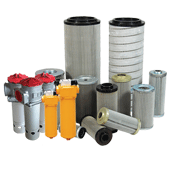
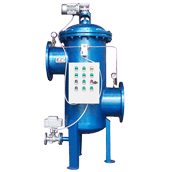
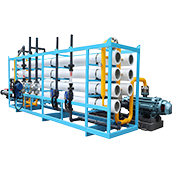
A Liquid-Liquid Coalescer is a specialized filtration system designed to separate two immiscible liquids of different densities, most commonly oil and water. It efficiently removes dispersed, fine oil droplets from a continuous water phase, or conversely, removes water droplets from fuels and hydrocarbon streams. This process is critical for environmental compliance, resource recovery, product quality, and process protection. Lefilter provides high-performance Liquid-Liquid Coalescer Cartridges and Systems engineered for maximum separation efficiency and reliability in the most demanding applications.
How a Liquid-Liquid Coalescer Works
Unlike filters that remove solids, liquid-liquid coalescers facilitate the physical merging of tiny, suspended droplets of one liquid phase within another. Our systems employ a multi-stage process within a single vessel:
Coalescence Stage: The contaminated liquid mixture (e.g., oily water) flows through specially formulated coalescer media inside a replaceable cartridge. This media is typically made of polymer or glass fiber with precise surface properties. As the fluid passes through, micron and sub-micron-sized droplets of the dispersed phase (oil or water) collide with the media fibers, coalesce into larger, heavier droplets.
Separation & Settling Stage: Due to the significant density difference, the enlarged droplets are more easily separated from the main fluid stream by gravity. Inside the vessel, the coalesced phase (e.g., oil) rises to the top (or water settles to the bottom) of a quiet separation/sump chamber.
Collection & Discharge Stage: The separated, clean continuous phase (e.g., water) exits the vessel. The coalesced, separated phase (e.g., oil) accumulates and is discharged via an interface level control or a dedicated outlet, resulting in two distinct, purified streams.
Key Features & System Advantages
Our Liquid-Liquid Coalescers deliver superior performance, operational reliability, and cost-effectiveness, offering significant benefits:
High-Efficiency Separation: Achieve effluent water with < 10 ppm (often to 5 ppm or lower) of free oil, and fuel/hydrocarbons with < 0.5% free water, meeting stringent environmental and process specifications.
Effective on Emulsified Oils: Specially designed media and chemistries can break and separate mechanically emulsified oils, overcoming the limitations of simple gravity separators.
Compact, High-Capacity Design: Provides superior separation performance in a much smaller footprint compared to traditional large settling tanks or API separators, saving valuable space.
Engineered to Prevent Re-entrainment: Advanced vessel internals and flow distribution ensure separated phases are not re-mixed, guaranteeing consistent, high-purity outlet streams.
Customizable Solutions: We offer systems and replacement cartridges tailored to specific fluid chemistries (pH, salinity, oil type), flow rates, and inlet contaminant levels, including options for pre-filtration and coalescer media optimization.
Technical Specifications & Selection Guide
Parameter | Specification / Consideration |
|---|
Primary Function | Separation of two immiscible liquid phases (Oil/Water, Hydrocarbon/Water) |
Typical Separation Efficiency | Oil from Water: Effluent to < 10 ppm oil. Water from Fuel: Effluent to < 0.1% free water. |
Droplet Size Removal | Effective on droplets as small as 1-20 microns, depending on media selection. |
System Flow Rates | From 1 GPM to over 1,000 GPM; skid-mounted or cartridge-vessel systems available. |
Vessel Design | Horizontal or vertical pressure vessels in Carbon Steel (coated), 304/316 SS, or FRP. |
Coalescer Media Type | Polypropylene, Glass Fiber, or Specialty Polymer Media, treated for oleophilic/hydrophilic properties. |
Operating Pressure | Typically 150 PSI standard; higher pressures up to 450+ PSI available. |
Operating Temperature | Dependent on media and seal materials; standard up to 180°F (82°C). |
Control & Instrumentation | Options include level gauges, interface probes, automatic dump valves, and PLC controls. |
Primary Industrial Applications
Liquid-Liquid Coalescers are vital in industries where the separation of oil and water is a regulatory, operational, or economic necessity:
Produced Water Treatment (Oil & Gas): Treating wastewater from oil and gas production to remove dispersed hydrocarbons before discharge or reinjection, meeting strict environmental regulations.
Fuel & Lube Oil Conditioning: Removing entrained water from diesel, jet fuel, kerosene, and lubricating oils to protect engines, turbines, and fuel cells from corrosion and microbial growth.
Marine & Offshore: Bilge water treatment (to meet IMO MEPC 107(49) standards), fuel polishing, and lube oil purification on ships and platforms.
Petrochemical & Refining: Process water cleanup, condensate polishing, and separation of liquid phases in various refining processes.
Food & Beverage: Separating fats, oils, and grease (FOG) from wastewater streams for environmental compliance and resource recovery.
Industrial Wastewater Treatment: Final polishing stage for wastewater from metalworking, automotive, and manufacturing plants to remove trace emulsified oils before discharge.
Frequently Asked Questions (FAQ)
Q: How is a Liquid-Liquid Coalescer different from an API Separator or a CPI Plate Separator?
A: API/CPI separators rely primarily on gravity settling and are effective for removing large oil droplets (>150 µm). A Liquid-Liquid Coalescer uses internal media to actively coalesce much smaller droplets (1-20 µm) and is far more efficient and compact, often used as a polishing unit after a primary separator.
Q: Can a coalescer break chemical emulsions?
A: Standard coalescers are designed for mechanicalor freeemulsions. Chemically stabilized emulsions (created by surfactants) typically require pretreatment (e.g., pH adjustment, de-emulsifier chemicals) before coalescing can be effective. We offer media that is compatible with various chemical environments.
Q: How do I size a coalescer system for my application?
A: Sizing depends on flow rate, fluid properties (viscosity, density difference, temperature), inlet contamination level, and desired outlet purity. Our technical team can help with the selection process based on your specific data.
Q: How often do the coalescer cartridges need to be replaced?
A: Service life depends on solids loading. Often, a pre-filter is used upstream to remove particulates and protect the more expensive coalescer cartridge. The coalescer cartridge itself is replaced when differential pressure increases significantly or separation efficiency declines, which can range from 6 to 24 months.
Q: Do you provide replacement cartridges for OEM liquid-liquid coalescer vessels?
A: Yes, absolutely. We are experts in manufacturing high-performance, direct-fit replacement coalescer cartridges for all major OEM systems (e.g., Pall, CUNO, Facet, Parker). Send us your OEM part number for a compatible, high-quality, and cost-effective alternative.