Coalescer Separator Element: The Core Component for Pure Gas Streams
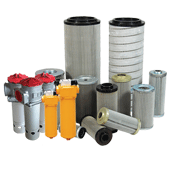
A Coalescer Separator Element is the vital, replaceable cartridge inside a filter vessel that performs the critical task of purifying gas streams. Its function is to remove entrained liquid aerosols (like oil and water mist) and fine solid particles from compressed air, natural gas, and other process gases, delivering clean, dry, and contaminant-free gas to protect downstream equipment and ensure product quality.
How a Coalescer Separator Element Works
The element operates through a sophisticated, multi-stage physical process inside the filter housing:
Coalescing Stage: The gas stream, laden with micron and sub-micron sized liquid droplets and solids, flows from the outside of the element through specialized depth media (often micro-glass fiber). This media forces the tiny aerosols to collide and coalesce into larger, heavier droplets.
Separation & Drainage Stage: The now-enlarged liquid droplets are carried by the gas flow to the inner core of the element. Here, they are shed onto the inner surface, where they combine and fall by gravity into the quiet sump of the filter housing. The separated liquid is then drained away automatically or manually.
Final Barrier Stage: The clean gas exits the element, often passing through a final mesh or membrane layer that acts as a barrier against any potential re-entrainment of the captured liquids.
Key Features & Advantages of Our Coalescer Elements
High-Efficiency Removal: Achieve >99.99% efficiency in removing liquid aerosols (oil, water, chemicals) down to 0.1 micron and smaller, ensuring ultra-clean gas.
High Dirt-Holding Capacity: Optimized media grading and pleat design capture more contaminants, extending service life and reducing change-out frequency.
Low, Stable Pressure Drop: Precision-engineered media provides maximum flow with minimal initial pressure drop, saving energy costs over the element's lifecycle.
Robust Construction: Built with durable materials like stainless steel or composite cores, polymer or metal end caps, and a choice of seals (Buna-N, Viton, EPDM) for reliable performance in demanding conditions.
OEM-Compliant Design: Manufactured as direct replacement elements for all major brands (Pall, Parker, Donaldson, etc.), ensuring perfect fit, form, and function in your existing vessels.
Technical Specifications & Selection Guide
Parameter | Specification |
|---|
Primary Function | Liquid Aerosol & Particulate Coalescence and Separation |
Typical Efficiency | >99.99% on 0.1 µm liquid aerosols; >99.9% on 0.3 µm particles |
Standard Connections | Double Open End (DOE), Single Open End (SP/TC), Threaded (NPT, BSP) |
Standard Lengths | 10", 20", 30", 40", 60" (Custom lengths available) |
Media Type | Multi-layer Borosilicate Glass Microfiber, with or without membrane layer |
Core Material | 304/316 Stainless Steel, Polycarbonate, Coated Steel |
Seal Material | Standard: Buna-N. Options: Viton, Silicone, EPDM, Kalrez®. |
Max. Operating Pressure | Typically 150-300 psig (standard), higher ratings available. |
Max. Operating Temperature | Standard: 82°C (180°F). High-temp options up to 150°C+ available. |
Recommended Change-Out ΔP | 7-8 psid (0.5 bar) differential pressure. |
Industry Applications
Our coalescer separator elements are essential across industries where clean, dry gas is critical:
Natural Gas Processing: Protect turbines, compressors, meters, and gas pipelines from lube oil and water carryover at wellheads, compressor stations, and custody transfer points.
Compressed Air Systems: Provide instrument-quality air (ISO 8573.1 Class 1 or 0) for pneumatic tools, paint spraying, food & beverage processing, and pharmaceutical manufacturing.
Aviation Fueling: Remove free water and particulate contamination from jet fuel to protect aircraft engines and meet stringent DEF STAN and IATA standards.
Petrochemical & Refining: Purify process gases (hydrogen, nitrogen, syngas), protect catalysts, and ensure purity in polymerization and reactor feed streams.
CNG/LNG: Critical for vehicle fueling stations and liquefaction plants to remove compressor oil and water, ensuring fuel quality and system safety.
Frequently Asked Questions (FAQ)
Q: What’s the difference between a Coalescer Element and a Particulate Filter Element?
A: A particulate filter only removes solid particles. A Coalescer Separator Element is designed to remove both solids and liquid aerosols, which requires a different media structure and internal flow path to coalesce and drain liquids effectively. They are often used in series.
Q: How do I know when to replace my coalescer element?
A: The most reliable indicator is the differential pressure (ΔP) across the filter housing. Replace the element when the ΔP reaches the manufacturer's recommended limit (typically 7-8 psid). A sudden spike or a gradual, steady increase in ΔP signals that the element is loaded and requires replacement.
Q: Can I use a coalescer element rated for oil to remove water?
A: Yes. A properly designed liquid coalescer element is effective on both hydrocarbon-based liquids (oil, lubrication) and water-based aerosols. The coalescing process is primarily physical, based on droplet size and surface tension.
Q: Are your elements compatible with my existing [Pall/Donaldson/etc.] filter housing?
A: Yes, 100%. We specialize in manufacturing direct-fit, performance-equivalent replacement elements. Provide us with your OEM part number or housing model, and we will supply the correct compatible element.
Q: Do you offer high-efficiency or high-flow models?
A: Yes. We provide a range of efficiencies, from general-purpose to ultra-high-efficiency (for sub-micron removal). High-flow designs with more media area are also available for applications requiring minimal pressure drop. Contact us with your specific process conditions.