Solving Oil-in-Water Problems in Industry: The Efficiency of a Process Water Coalescer
Across countless industries—from petrochemical and food processing to metalworking and marine—a common challenge exists: separating immiscible oils and hydrocarbons from water streams. Whether for environmental compliance (meeting EPA or local effluent limits), water reuse, or protecting downstream processes, a Process Water Coalescer is a workhorse solution.
What is a Process Water Coalescer?
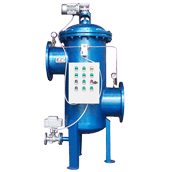
It is a mechanical separator designed to remove dispersed, non-emulsified, and free oils from water. It operates on the principle of differential density and coalescence:
The oily water enters the vessel and flows through a pack of coalescing media (plates or tubes).
This media provides a large surface area where tiny oil droplets (as small as 10-20 microns) collide and merge into larger drops.
Due to their lower density, these large oil droplets rapidly rise to the surface of the vessel, forming a distinct oil layer that is automatically skimmed off.
The clarified water is discharged from the bottom or side.
Key Benefits of Lefilter's Design:
No Chemicals: Physical separation means no ongoing chemical costs or secondary pollution.
Low Operating Cost: Minimal energy use, only requiring pump pressure.
Handles Variable Loads: Effective over a range of oil concentrations and flow rates.
Compact & Scalable: From small skid-mounted units to large concrete designs.
Low Maintenance: No moving parts within the coalescing section.