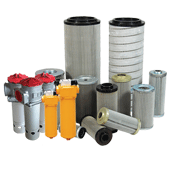
CA56 Series Coalescing Filter: Technical Overview & Performance Optimization
The CA56 series coalescing filter represents a class of high-performance filtration elements designed for demanding industrial applications where reliable separation of liquid aerosols from gas streams is critical. These filters are engineered to handle substantial flow rates while maintaining exceptional efficiency, making them ideal for central compressed air systems, natural gas processing, and large-scale industrial operations. Understanding the capabilities and proper application of CA56 series filters is essential for optimizing system performance and protecting valuable downstream equipment.
Technical Specifications & Design Features
Core Design Parameters
Series Designation: CA56 (multiple variants: CA56-1, CA56-2, CA56-3, etc.)
Element Construction: Large diameter pleated cartridge design
Typical Dimensions: 12-20" length × 5.6" diameter (varies by specific model)
Media Configuration: Multi-layer gradient density glass fiber matrix
Support Structure: Heavy-duty stainless steel inner and outer cores
End Cap Design: Reinforced polymer or metal with secure bonding
Seal System: Multiple O-ring configuration for positive sealing
Performance Characteristics
Filtration Efficiency: 99.97% at 0.3 microns (liquid aerosol removal)
Maximum Flow Capacity: 100-250 SCFM depending on model
Operating Pressure Range: 5-150 PSIG standard (higher available)
Temperature Tolerance: -40°F to 275°F (-40°C to 135°C)
Initial Pressure Drop: < 3.5 PSI at rated flow
Dirt Holding Capacity: 40-80 grams typical depending on media grade
Coalescing Media: Hydrophobic-treated glass fiber for water removal
Applications & Industry Deployment
Industrial Compressed Air Systems
Central Compressor Plants: Main filtration for large air networks
Manufacturing Facilities: Protecting pneumatic tools, cylinders, and valves
Food & Beverage Processing: Ensuring oil-free air for product contact
Pharmaceutical Manufacturing: Meeting stringent air purity requirements
Energy & Gas Processing
Natural Gas Dehydration: Pipeline quality conditioning
Biogas Treatment: Upgrading landfill or digester gas
CNG/LNG Production: Fuel gas purification
Flare Gas Recovery: Contaminant removal before compression
Specialized Industrial Applications
Laser Cutting Systems: Protecting optical components from oil mist
Instrument Air Networks: Critical control system air supply
Paint Spray Operations: Ensuring contaminant-free air for finish quality
Laboratory Air Systems: Ultra-clean air for sensitive instruments