Coalescer Filter for Liquid Separation: The Precision Solution for Immiscible Fluids
A Coalescer Filter for Liquid Separation is a specialized, engineered filtration device designed to solve one of industry's most persistent challenges: the clean and efficient separation of two immiscible liquids. Whether it's removing oil from water, water from fuel, or separating two distinct chemical phases, this technology is the definitive answer for achieving process fluid purity, product integrity, and regulatory compliance. Lefilter delivers high-performance, application-specific Coalescer Filters that provide unmatched reliability and efficiency in liquid-liquid separation.
Defining the Challenge & the Coalescer Solution
Many industrial processes generate mixtures of liquids that do not naturally mix, such as oil-in-water or water-in-fuel dispersions. Gravity alone is too slow and ineffective for droplets smaller than 50-100 microns. A Coalescer Filter accelerates this natural process by providing a specialized medium that promotes the coalescence of these finely dispersed droplets into larger ones, which then readily separate by gravity. It bridges the gap between simple settling tanks and complex, chemical-intensive treatments.
How Our Advanced Coalescer Filter Works
Our filters utilize a targeted, media-driven approach to achieve rapid and complete separation:
Dispersion & Distribution: The mixed liquid stream enters the filter housing and is evenly distributed across the surface of the proprietary coalescer media pack or cartridge. This media is precisely engineered with surface properties (oleophilic for oil removal from water, or hydrophilic for water removal from fuels) to attract the target dispersed phase.
Coalescence & Growth: As the mixture flows through the intricate pore structure of the media, the microscopic droplets of the dispersed phase (e.g., oil) collide and adhere to the media fibers. These droplets then merge, or coalesce, with other droplets, growing in size from microns to millimeters. This growth is the critical step that transforms a stable, hard-to-separate dispersion into an easily separable mixture.
Release & Gravity Separation: Once the droplets reach a critical size, the force of buoyancy (or gravity, depending on density) overcomes the fluid drag and adhesive forces. The enlarged droplets release from the media. Due to significant density difference, they rapidly rise (if lighter) or settle (if heavier) into a quiet collection chamber within the vessel.
Clean Phase Discharge: The now-purified continuous phase (e.g., water) exits the filter. The coalesced and separated phase (e.g., oil) is collected and automatically or manually removed from the system, resulting in two distinct, clean liquid streams.
Why Our Coalescer Filter Outperforms Traditional Methods
Superior Separation of Fine Droplets: Effectively removes droplets as small as 5-20 microns, achieving effluent clarity that simple gravity separators (API, CPI) cannot match. Consistently delivers water with <10 ppm oil or fuel with <0.05% free water.
Compact Footprint, High Throughput: Delivers equivalent or better separation performance in a fraction of the space required by large settling tanks or plate separators, offering significant capital and space savings.
Chemical-Free Operation: Provides a purely physical separation method. No chemicals, demulsifiers, or complex electrical systems are required, reducing operational complexity, cost, and environmental impact.
Handles Variable Loads & Flow Rates: Engineered media and vessel design maintain high separation efficiency even during flow surges or changes in inlet contaminant concentration, ensuring consistent output quality.
Low Maintenance & Operational Cost: With no moving parts in the separation stage, maintenance is primarily limited to periodic media inspection/replacement. Automated controls minimize operator intervention.
Technical Specifications & Configuration
Our coalescer filters are tailored to your specific fluid properties and separation goals.
Parameter | Specification / Customization |
|---|
Separation Type | Oil-from-Water / Water-from-Fuel / Solvent-from-Water / General Liquid-Liquid |
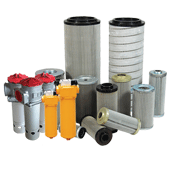
Media Type | Polypropylene Coalescer Packs, Glass Fiber Cartridges, or Specialty Polymer Media |
Media Wettability | Oleophilic (oil-attracting) or Hydrophilic (water-attracting) treatment available |
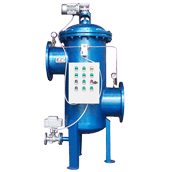
Vessel Design | Vertical or Horizontal, Carbon Steel (coated), Stainless Steel (304/316L), or FRP |
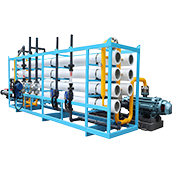
Flow Capacity | From 1 GPM to 1,000+ GPM; standard and custom skid-mounted systems |
Separation Efficiency | >99.5% removal of dispersed phase; effluent quality as low as <5 ppm achievable |
Inlet Conditions | Designed for inlet concentrations typically up to 1-5% dispersed phase. |
Ancillary Equipment | Integrated pre-filters, level controls, automated dump valves, and monitoring packages. |
Core Industrial Applications
Coalescer Filters for Liquid Separation are vital across numerous sectors:
Produced Water Treatment (Oil & Gas): Polishing wastewater from oil production to meet strict offshore discharge or onshore reinjection standards.
Marine & Offshore: Bilge water treatment to comply with IMO MEPC.107(49) regulations before discharge overboard.
Fuel & Lube Oil Conditioning: Removing entrained water from diesel, aviation fuel, hydraulic oil, and lubricants to protect engines, turbines, and critical machinery from corrosion and wear.
Coolant & Parts Washer Recycling: Removing tramp oils from industrial coolants and wash waters, extending fluid life and reducing disposal costs.
Chemical & Pharmaceutical Processing: Separating solvent phases, recovering valuable products, and purifying process streams.
Power Generation: Treating turbine lube oil and condensate, and managing oily wastewater from plant drains.
Frequently Asked Questions (FAQ)
Q: Can a coalescer filter break a chemical emulsion?
A: Standard coalescers are designed for mechanical dispersions. True chemical emulsions, stabilized by surfactants, often require pretreatment (e.g., pH adjustment, de-emulsifier injection, or thermal treatment) to "break" the emulsion before the coalescer can effectively separate the phases.
Q: How do I choose between a coalescer pack and a cartridge-style filter?
A: Coalescer Packs are ideal for high-flow, high-solids applications and can often be cleaned and re-used. Cartridge Elements offer higher surface area for finer polishing and are simply replaced when loaded. The choice depends on flow rate, contaminant load, and desired maintenance approach.
Q: Is pre-filtration necessary?
A: Highly recommended. Installing a bag filter or strainer (~50-100 micron) upstream removes large particulates that could prematurely foul or block the coalescer media, protecting your investment and extending service cycles.
Q: What is the expected service life of the coalescer media?
A: Life depends entirely on solids and liquid contaminant loading. With proper pre-filtration, coalescer packs may last 1-3 years, while cartridges may last 6-18 months. Performance is monitored via outlet clarity and pressure drop.
Q: Do you offer solutions for specific fluid chemistries (e.g., high salinity, solvents)?
A: Absolutely. We engineer solutions using media and construction materials (e.g., specific polymers, stainless steel grades) compatible with aggressive fluids, including high-salinity produced water, sour service, and various organic solvents.